Jews are the Most Privileged Demographic on Earth
Jews are not a marginalized group. They are concentrated in high-income nations and consistently rank towards the top in living standards, income and education.

NOTE: This is an excerpt from a longer article:
At the heart of every argument within the spectrum of Zionism lies the uncritically accepted belief that Jews are an eternally oppressed people and that antisemitism is a constant, rampant threat. The charge of antisemitism often functions as a thought-terminating cliché, deployed not only by staunch Zionists but even by well-meaning individuals who identify as pro-Palestine. Yet few pause to critically examine this assumption. What is the actual reality of Jewish oppression today, and how does contemporary antisemitism compare to the narrative so widely accepted?
By any objective measure, Jews are not a marginalized or oppressed group. Rather than facing structural or systemic oppression, they represent one of the most privileged demographics globally. The Jewish population is overwhelmingly concentrated in wealthy Western nations and their own ethnostate, societies that dominate the global imperial order. Within these power centers, Jewish communities consistently rank among the most affluent and highly educated groups, outperforming nearly all other demographics in measures of economic success and social mobility.
While antisemitism persists in individualized forms, it does not constitute the kind of institutionalized, state-enforced oppression experienced by truly marginalized groups. The material conditions of Jewish life worldwide contradict any claim of systemic disadvantage.
Privileged Reality of Jewish Demographics
First, let’s start with some facts:
There are nearly 16 million Jews worldwide.
The vast majority (~85%) live in just two countries: 40% in the United States and 45% in Israel.
The next largest populations (totaling ~7%) are in France, Canada, and the UK.
The remaining ~7% are scattered across other nations, each with fewer than 200,000 Jews.
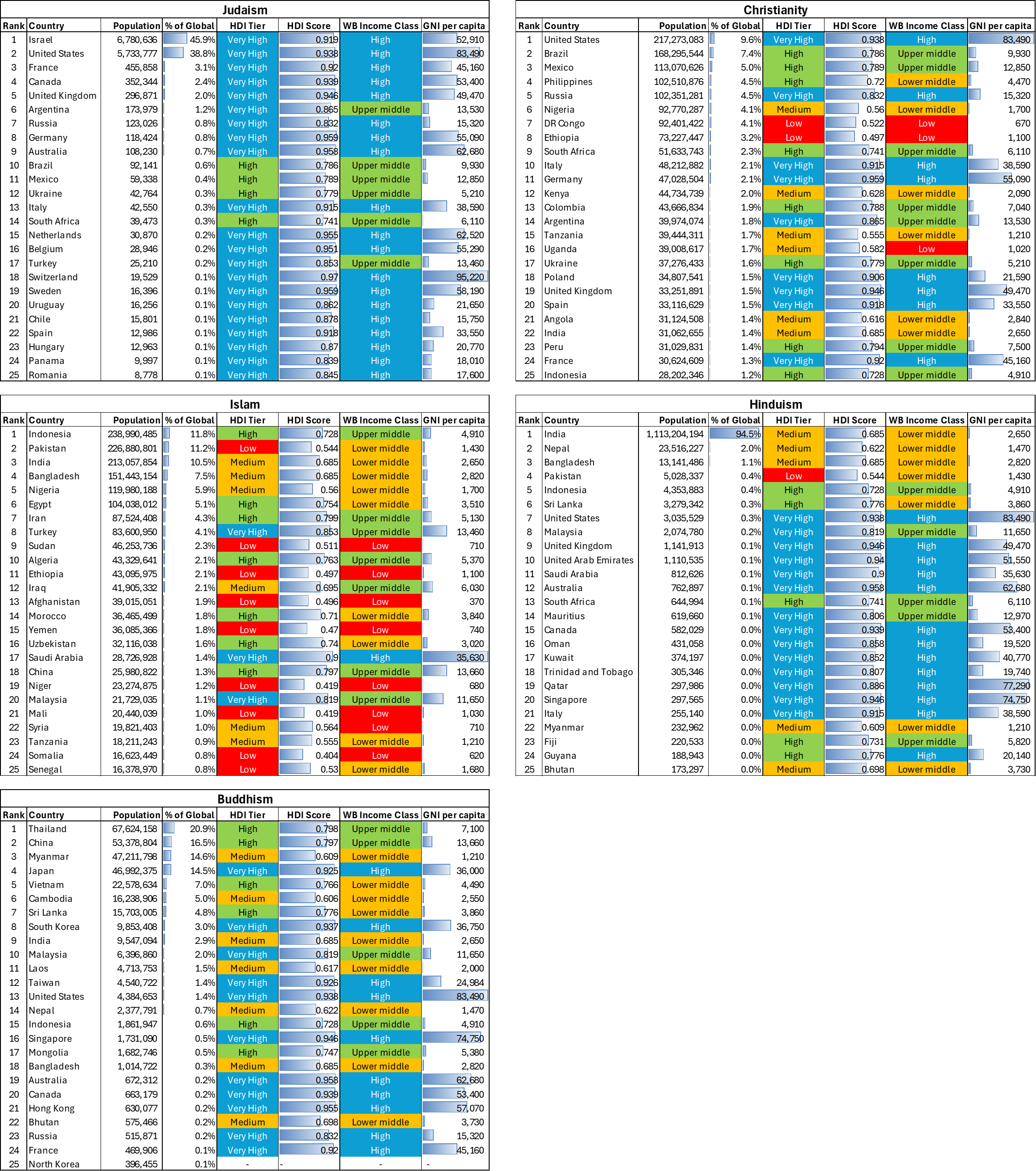
All top 5 countries with significant Jewish populations are ‘high-income nations’ with a very high ‘Human Development Index’ by the standards of the World Bank, IMF and OECD.
Within these countries, Jews consistently rank towards the top in living standards including income and education.
Global socioeconomic snapshot
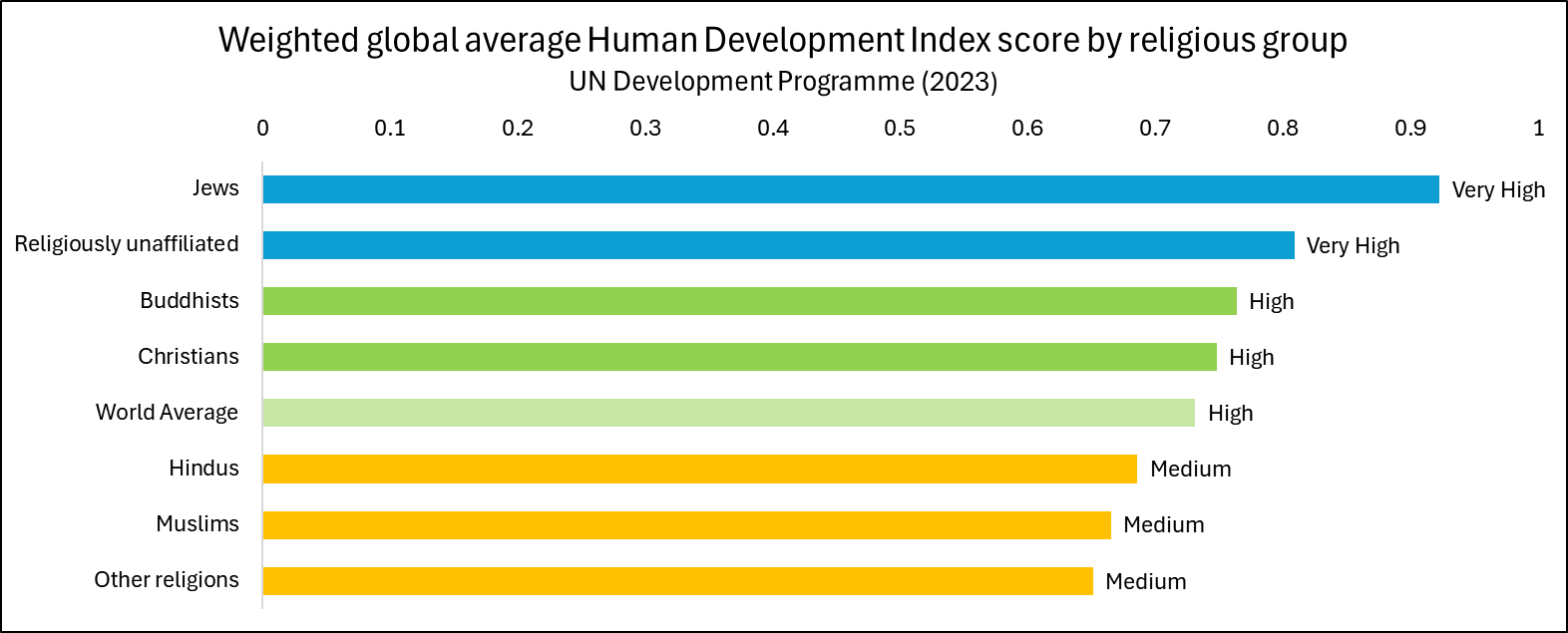
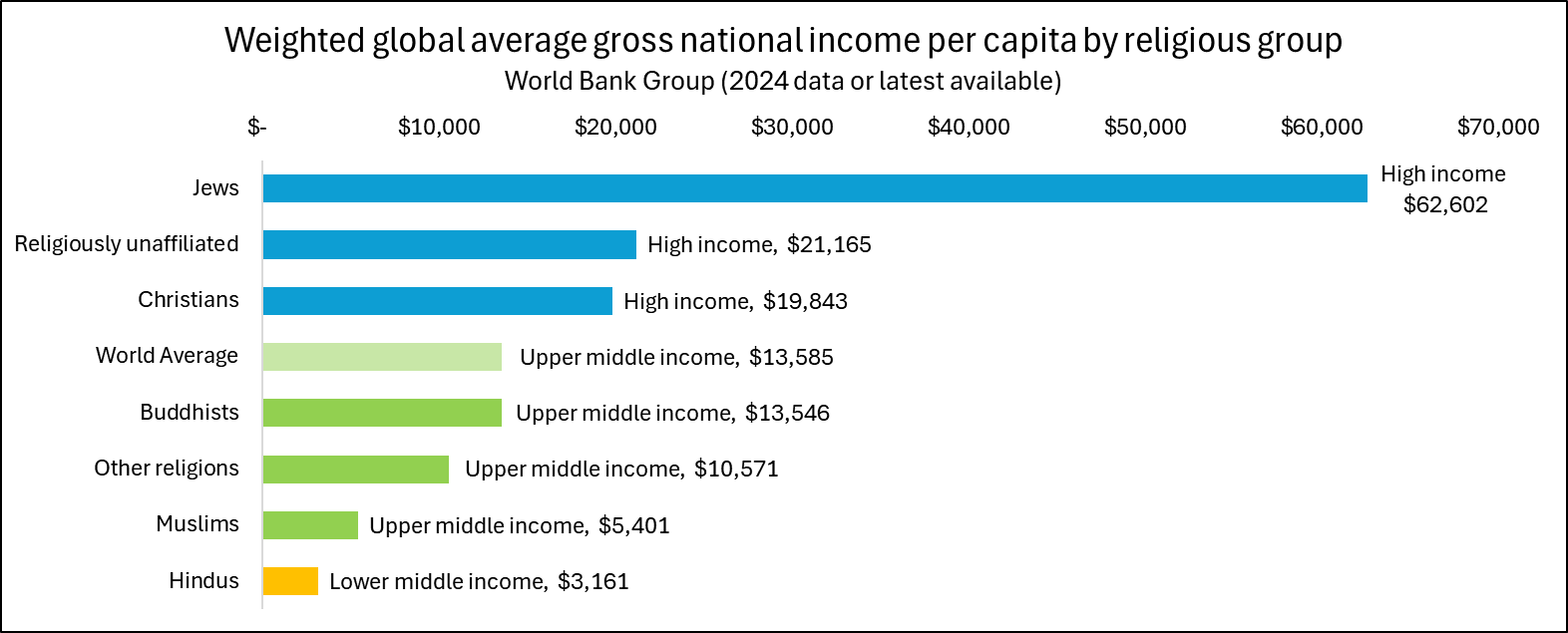
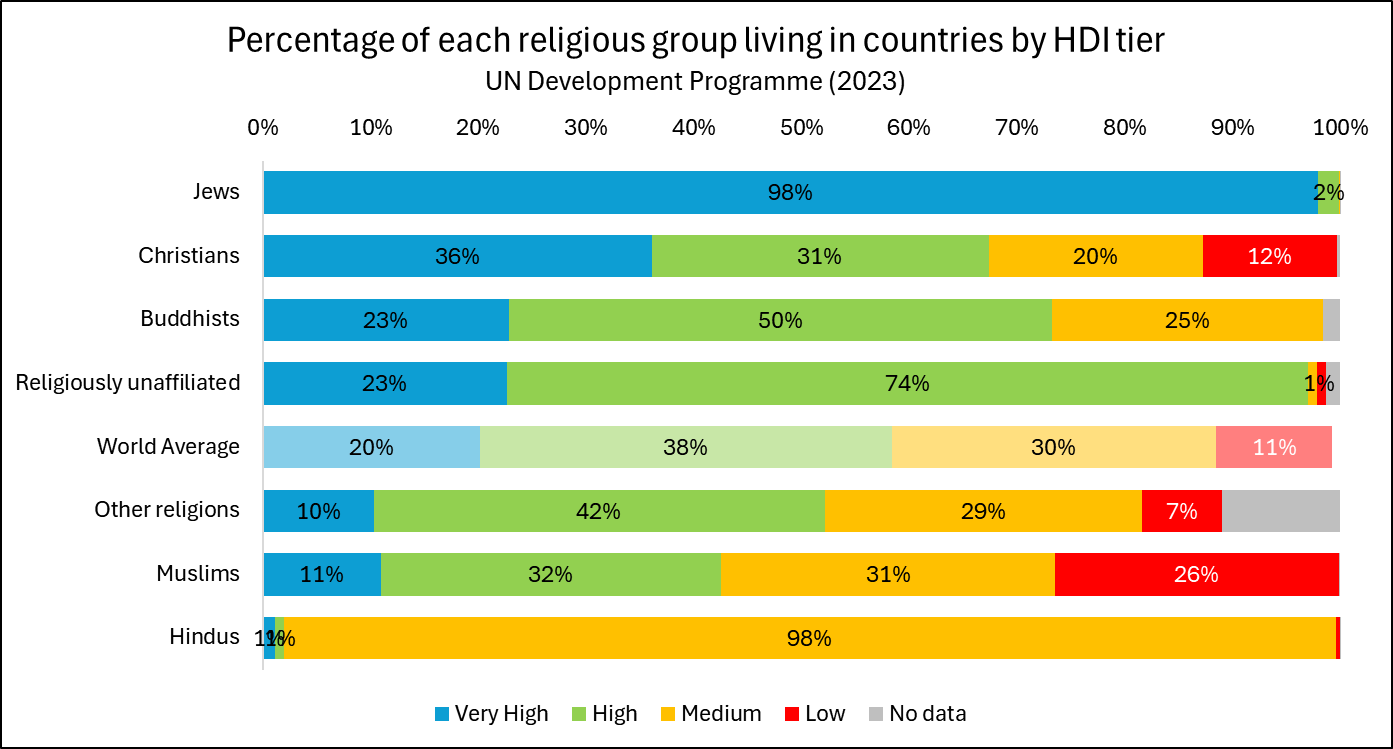
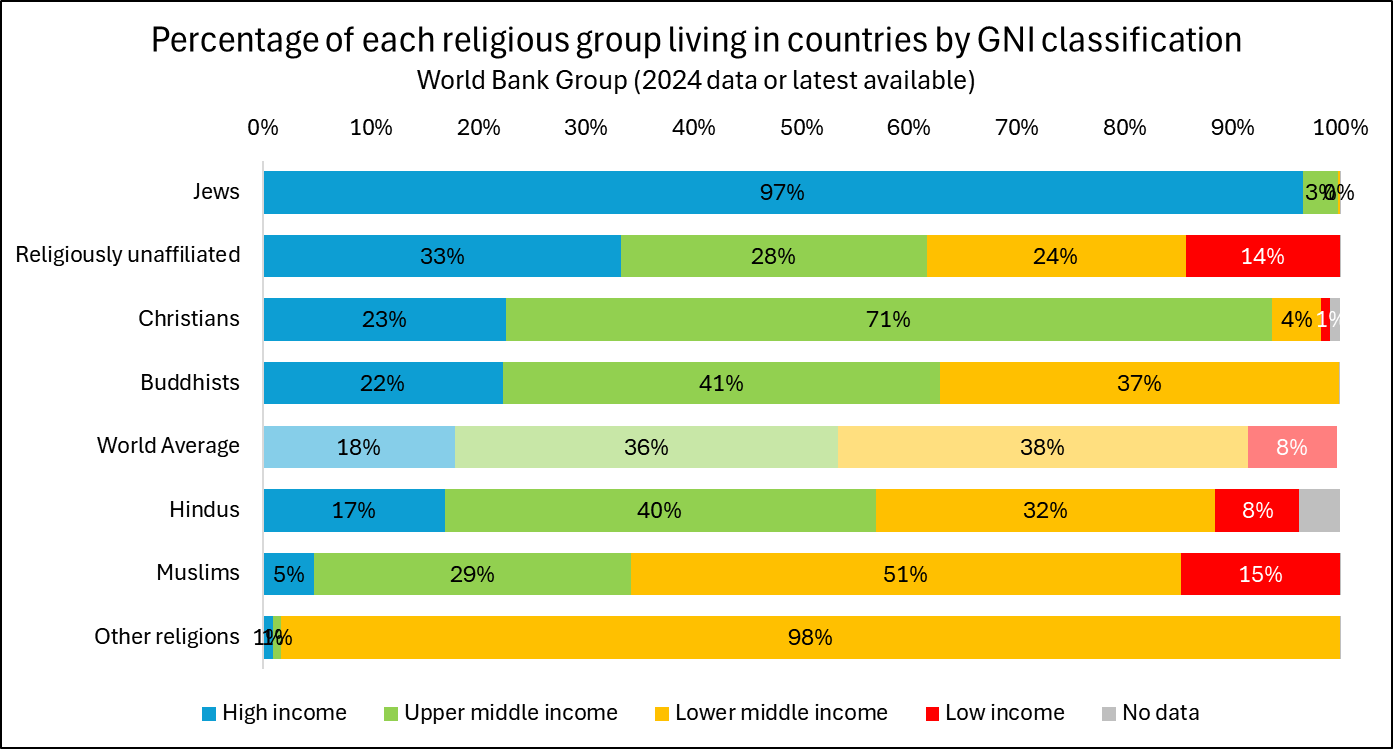
The following analysis combines latest available global data to compare socioeconomic indicators across religious demographics and provide a rough global snapshot. Data includes:
Religious composition by country (Pew Research Center, 2020)
Human Development Index (HDI) (UN Development Programme, 2023)
Gross National Income (GNI) per capita (World Bank Group, 2024 or latest)
The religious composition data, which includes the populations of each religious group per country, was used to calculate the weighted averages:
Pi = Population of religious group in each country
Xi = HDI or GNI of each country
The following findings can be drawn from the data:
Jews reside in countries with the highest average HDI score, 14% higher than the next-ranking group, ‘religiously unaffiliated.’
Jews have by far the highest average GNI per capita, which is three times greater than that of the next group, ‘religiously unaffiliated.’
Nearly all Jews (98%) live in countries classified as “Very High” on the HDI scale. The next highest group, Christians, stands at 36%.
Nearly all Jews (97%) live in countries classified as “High income” by GNI.
The next highest group, ‘religiously unaffiliated’, stands at 33%.
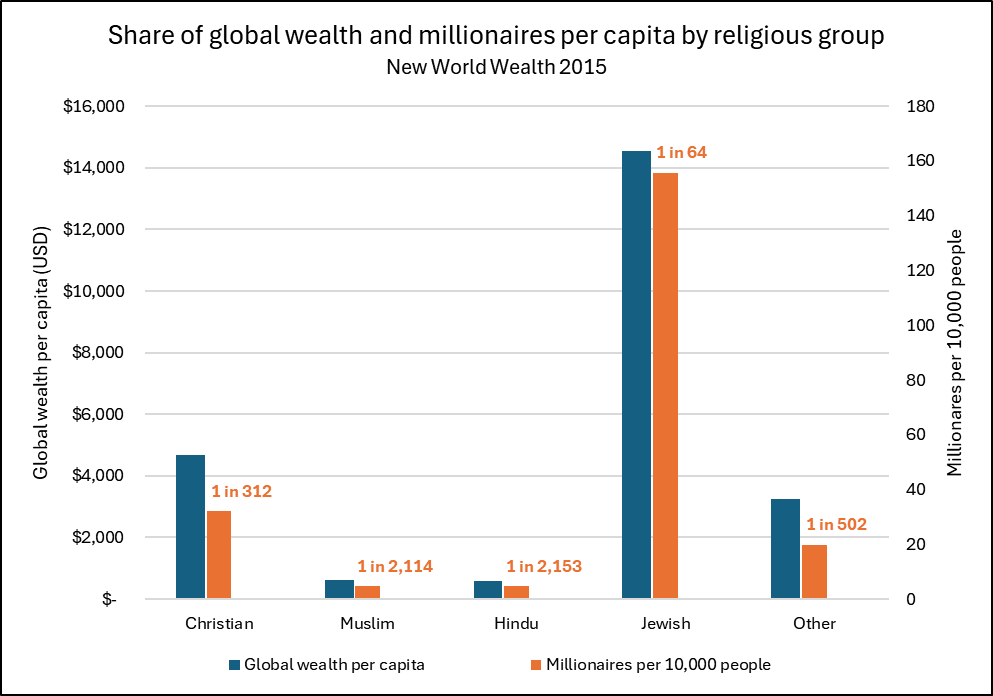
According to a study from 2015 by New World Wealth, although Christians hold the largest amount of total world wealth in total, Jews hold by far the largest amount per capita, eclipsing Christians by a factor of over 3 times. Jews also have the highest number of millionaires per capita, almost 5 times as much as Christians.
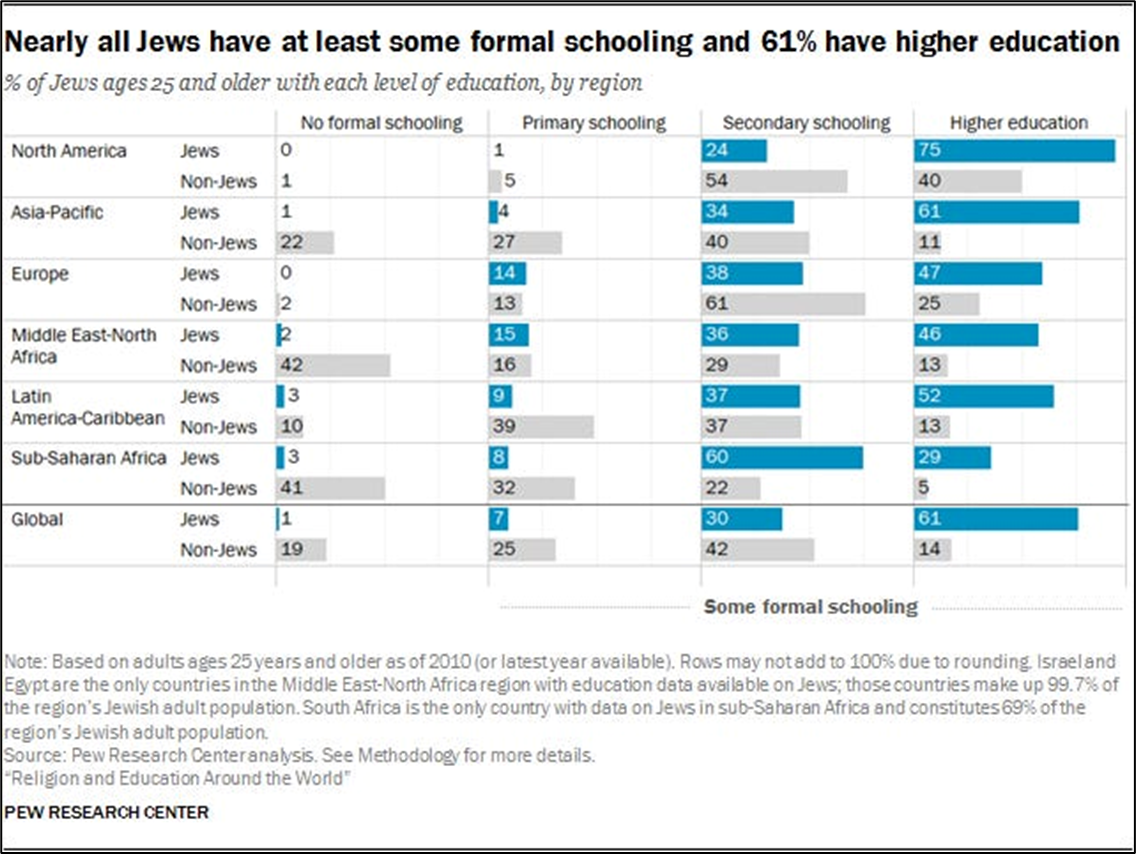
According to a Pew Research Center poll from 2016, Jews are the most highly educated of the world’s major religious groups with nearly all adults 25 and older (99%) having at least a primary education, and a majority (61%) have post-secondary degrees, which is over 4 times the global average.
Socioeconomic status in the U.S.
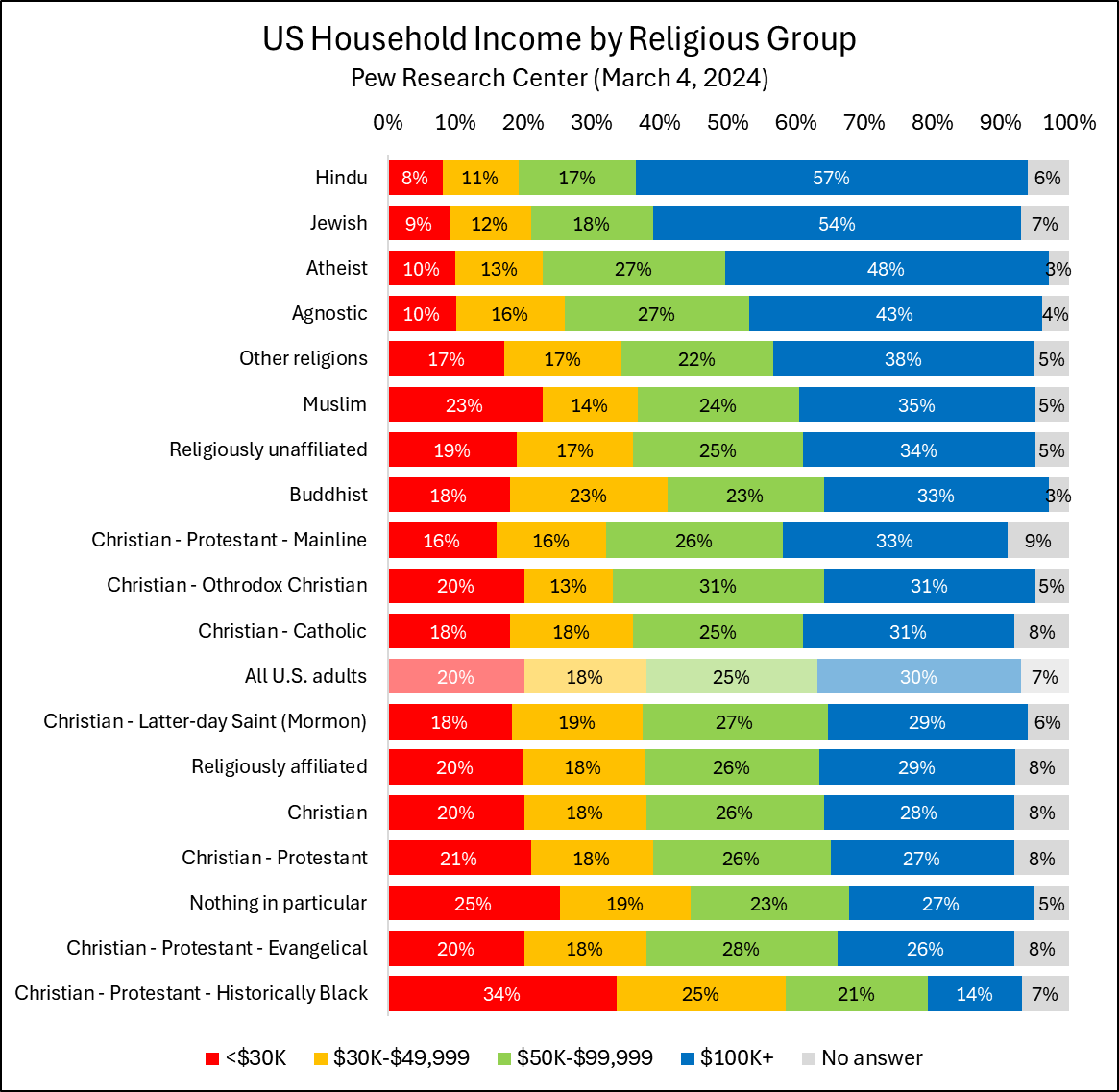
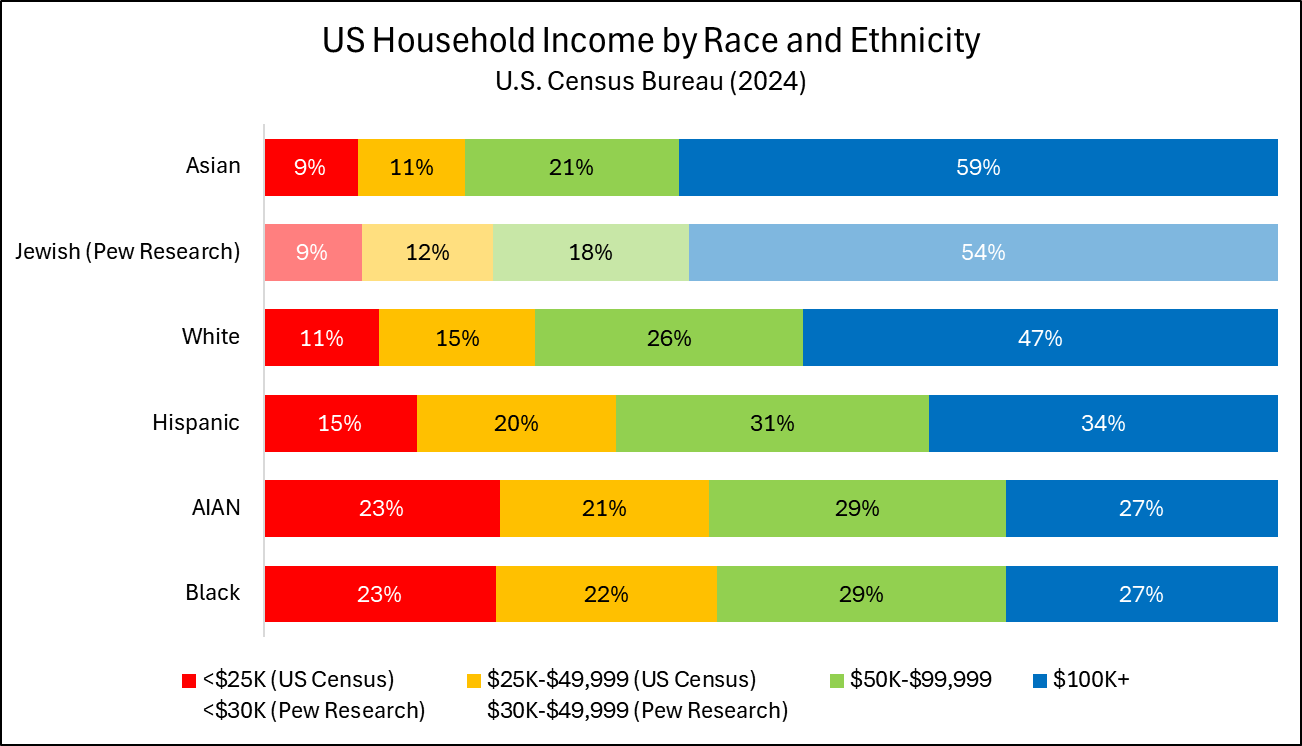
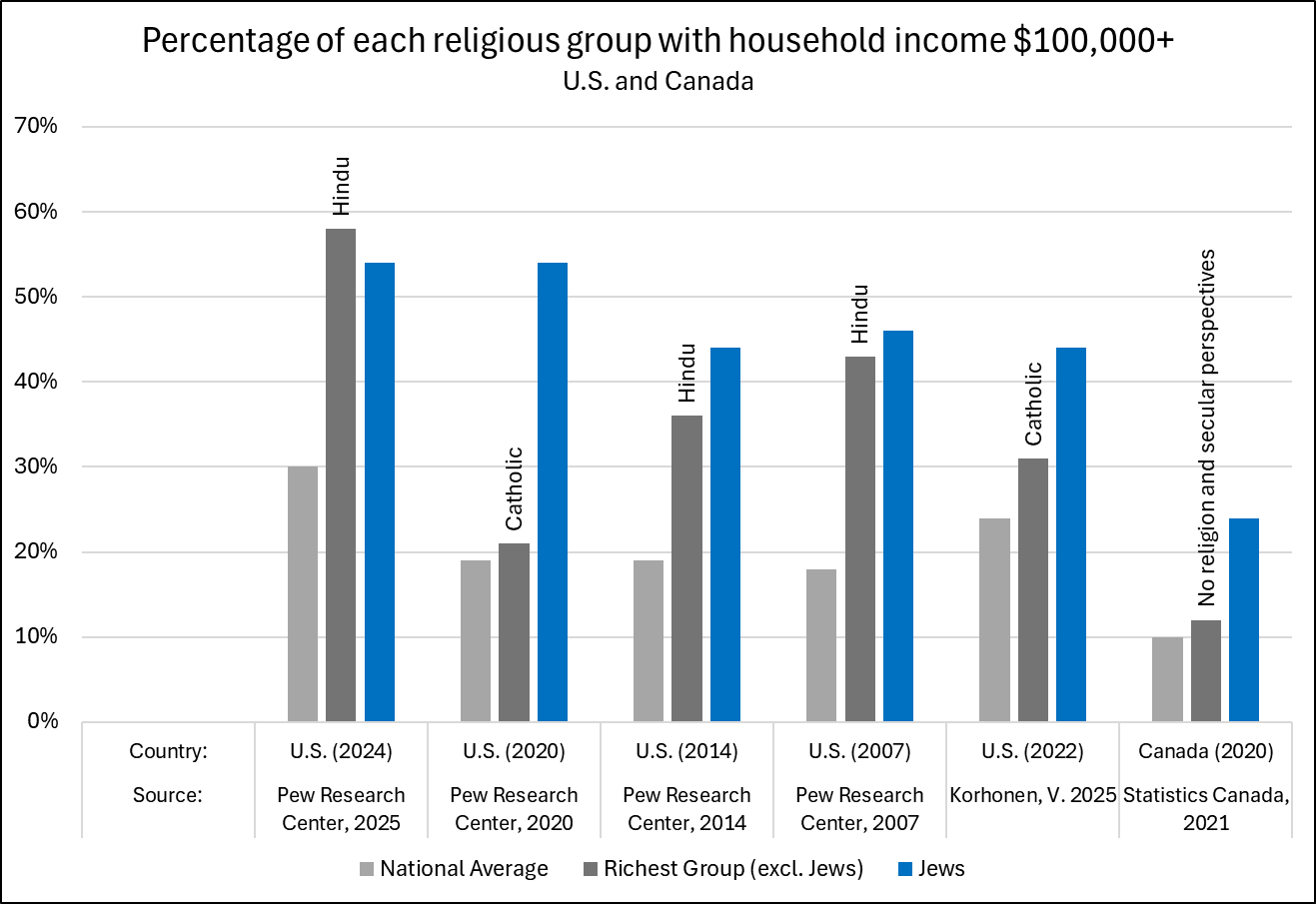
In the U.S., which holds the second largest number of Jews after Israel, according to a Pew Research Center poll conducted in 2024, 54% of American Jews report household incomes of over $100K, compared to the national average of 30%. They are the second wealthiest demographic by religion after Hindus. Note that American Hindus make up less than 0.3% of the total world Hindu population; about 95% of Hindus live in India, while American Jews make up 40% of the total world Jewish population.
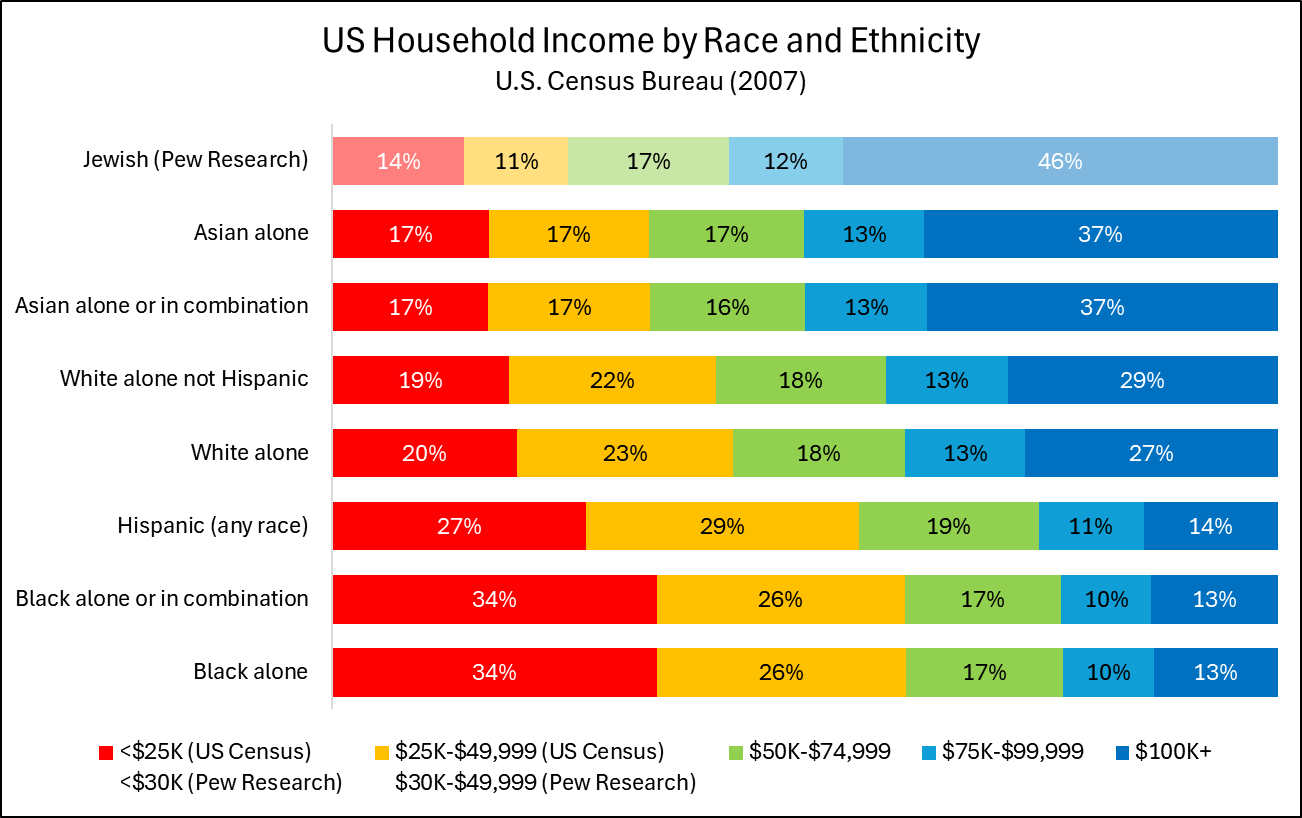
Comparing this to the breakdown of household income by race and ethnicity from the U.S. Census Bureau data from 2024 shows that Jewish households are still better off than White households which 47% of report household incomes of over $100K. It should be noted once again that, although Asians are at the top similar to Hindus in the previous graph, only 0.5% of the world’s Asians live in the U.S. compared to 40% of the total world Jewish population.
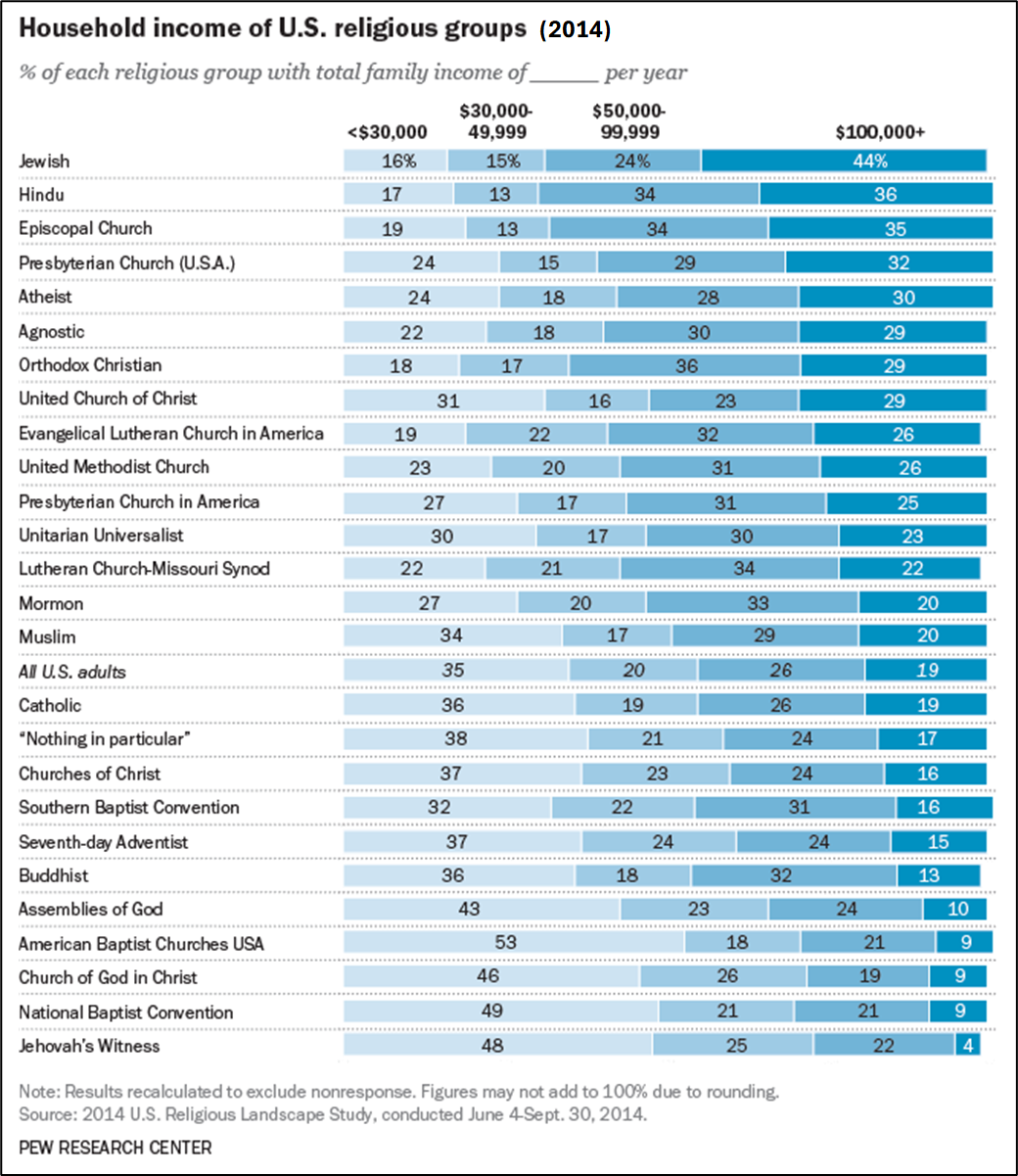
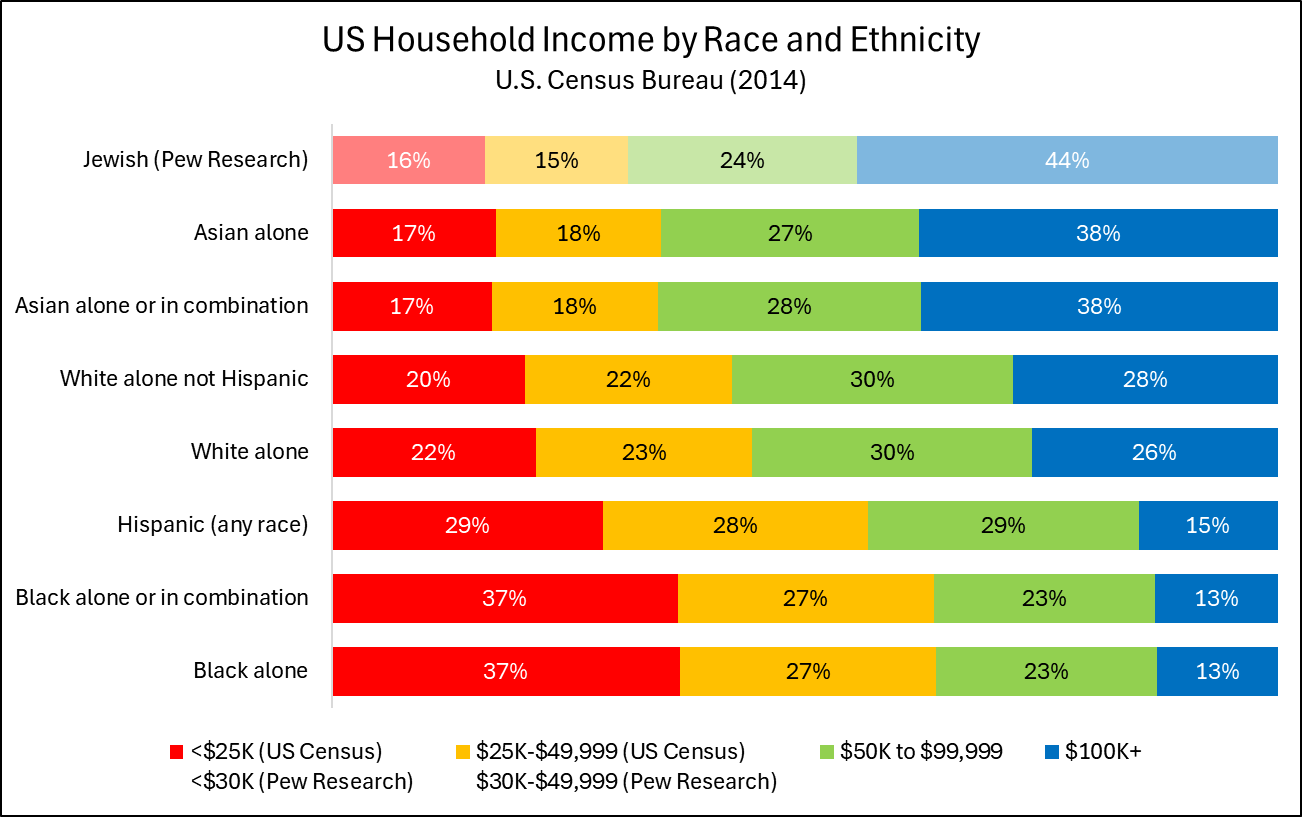
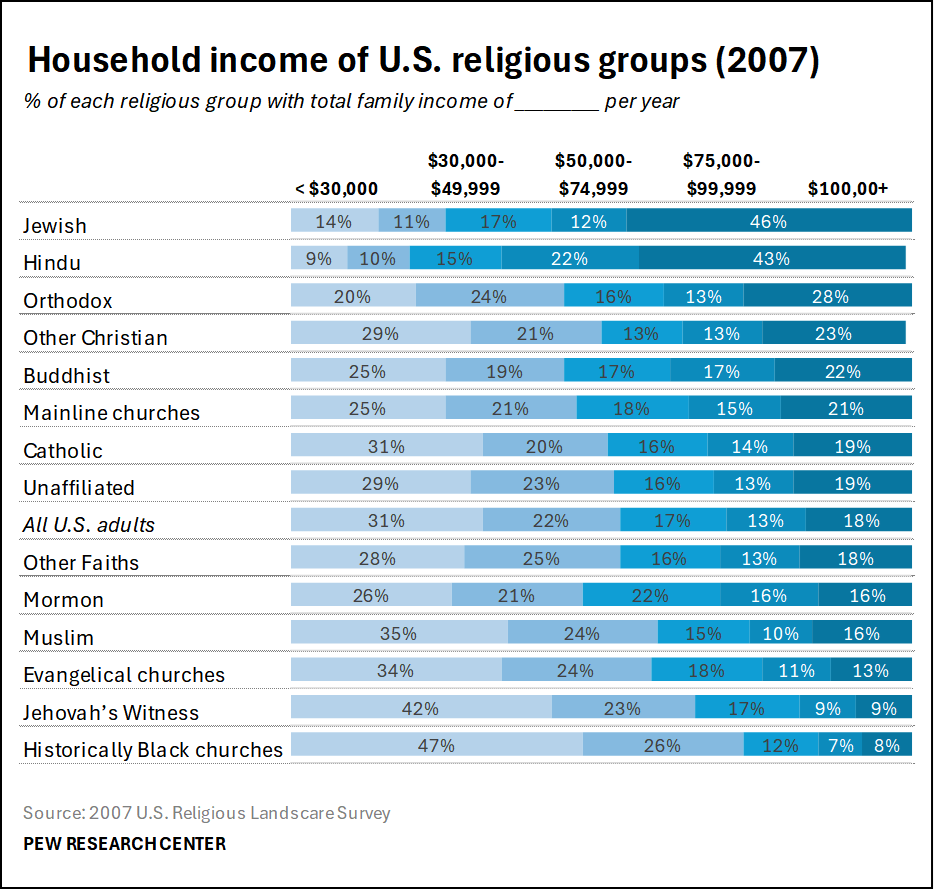
Previous surveys conducted by Pew Research Center in 2014 and 2007 show very consistent results with Jewish and Hindu Americans consistently sitting in the top two positions, with 44-46% of American Jews reporting family incomes of over $100K per year. Cross-checking this against the U.S. Census Bureau data of household income by race and ethnicity also shows consistency with Jewish households sitting firmly at the top ahead of Asian and White households.
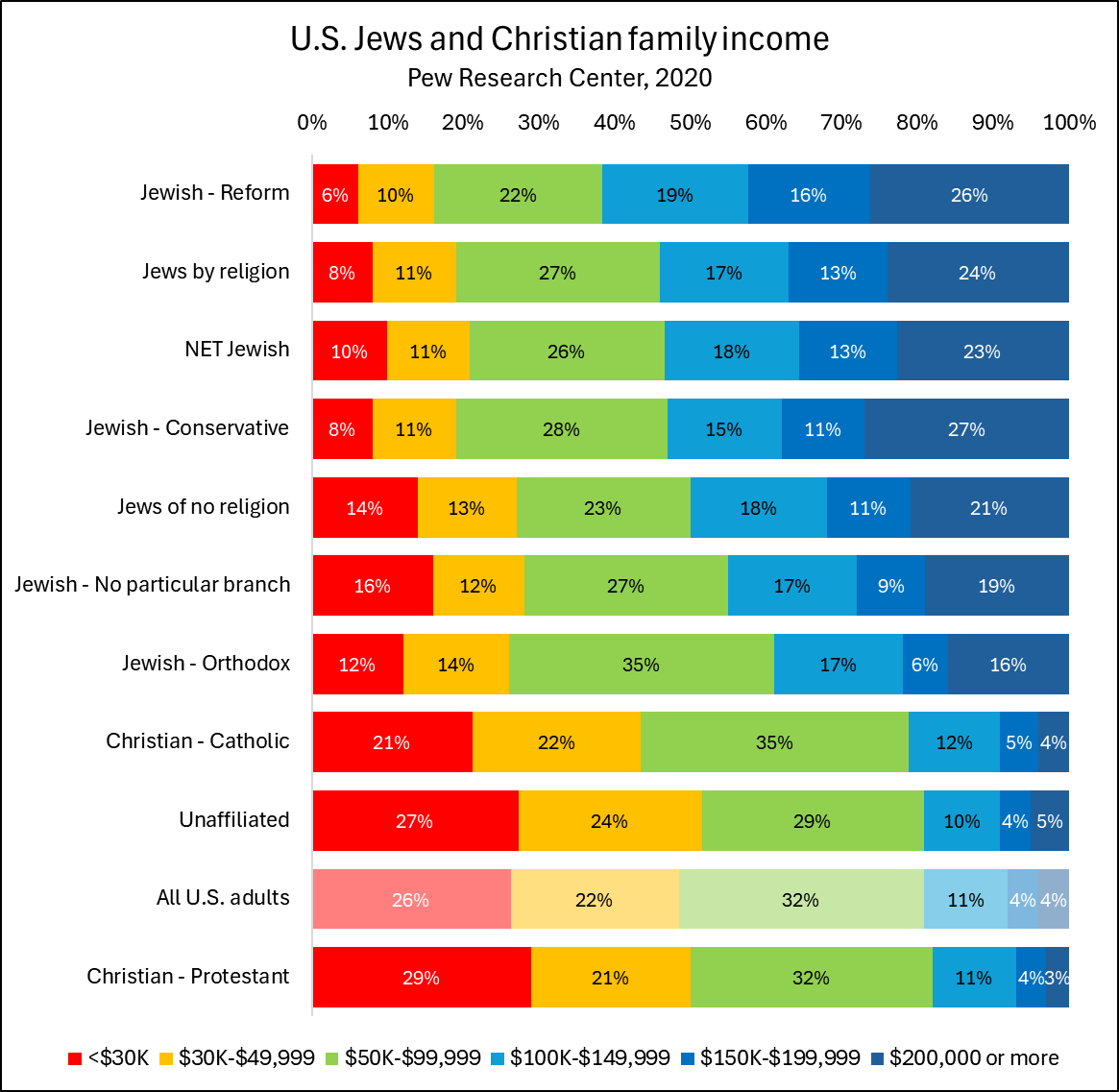
According to another Pew Research Center poll conducted in 2020, this wealth disparity is true across all branches of Jewish Americans, with all branches of Jews surveyed—Reform, Conservative, Orthodox, and no particular branch—reporting family incomes significantly higher than the U.S. average. Even among Orthodox Jews, the ‘poorest’ branch of American Jews, 39% report household incomes of over $100K, compared to the national average of 19%. It should be noted that according to the same study, Orthodox Jews make up only 9% of U.S. Jews, whereas Reform Jews, the wealthiest sub-group, make up 37%.
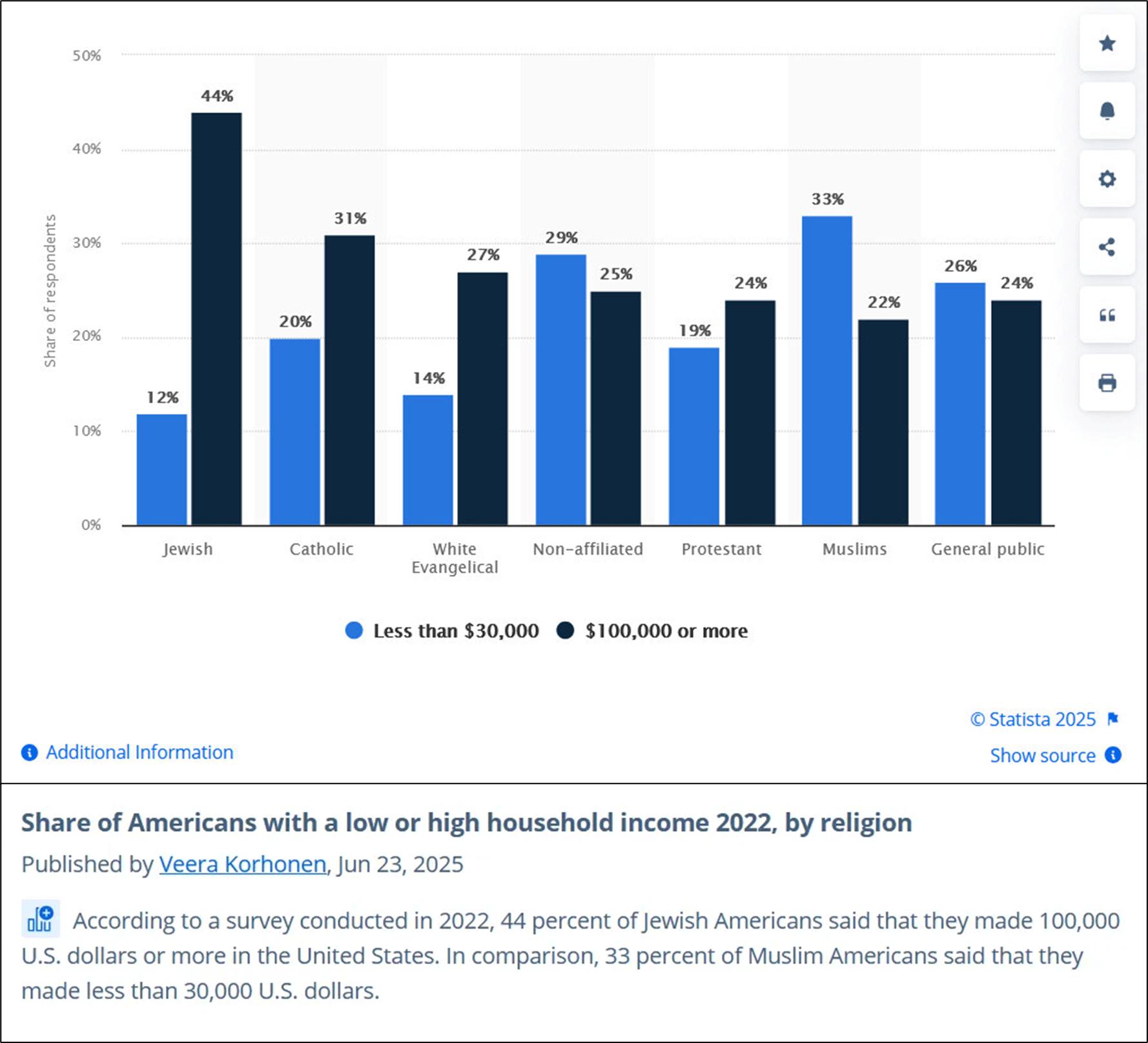
A survey from 2022 for household income by religion in the U.S. showed similar results with 44% of Jewish Americans making over $100K compared to the national average of 24%, the largest of any group by a margin of 13%.
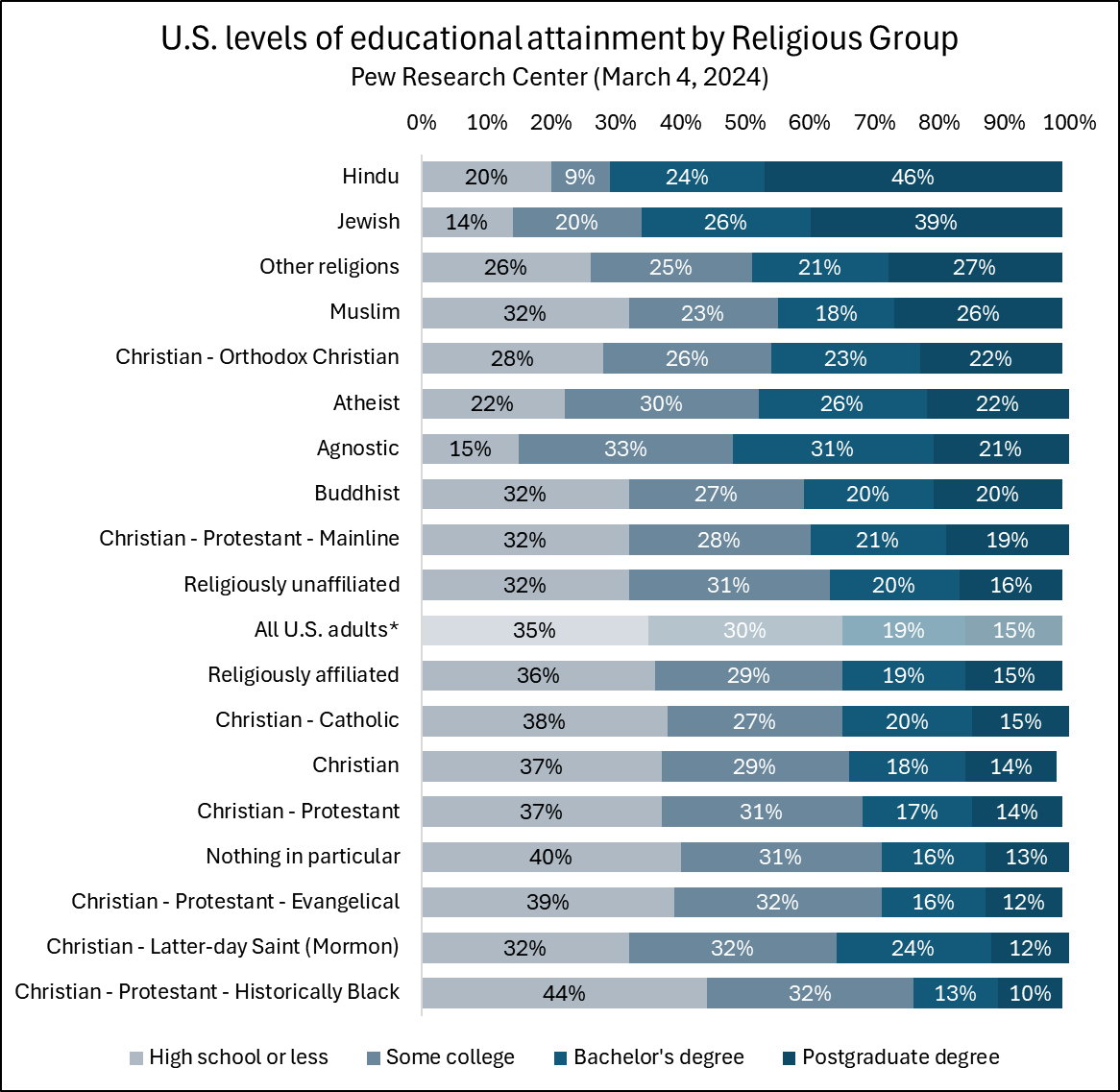
According to the 2024 Pew Research Center poll, American Jews are on average the second most highly educated religious group after Hindus with roughly two-thirds of Jews having a bachelor’s degree or higher compared to the national average of one-third. They are also the group with the least percentage of people with an educational attainment level of only ‘high school or less.’
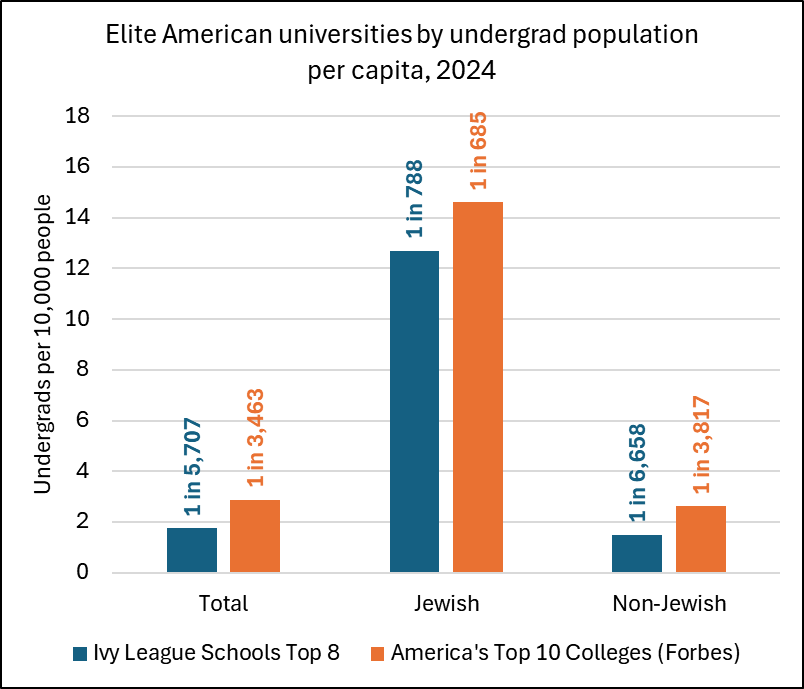
As aggregated by Hillel College Guide Magazine, the eight Ivy League Schools, which are considered some of the most prestigious and well-funded universities in the world, collectively have about 16% Jewish undergraduates as of 2024 (lowest being 9%; highest 24%). Forbes “America’s Top Colleges” of 2024 collectively have about 11% Jewish undergraduates (lowest 4%; highest 23%). These figures are significantly higher proportions than the total proportion of American Jewish population of 2.4% and eclipses the non-Jewish undergraduate population by a factor of 6 to 9 times per capita. In simpler terms, this roughly breaks down to:
1 in every 3,500-5,700 American enrolled in an elite college
1 in every 3,800-6,700 non-Jewish American enrolled in an elite college
1 in every 700-800 American Jew enrolled in an elite college
Socioeconomic status in the UK, Canada, France and elsewhere
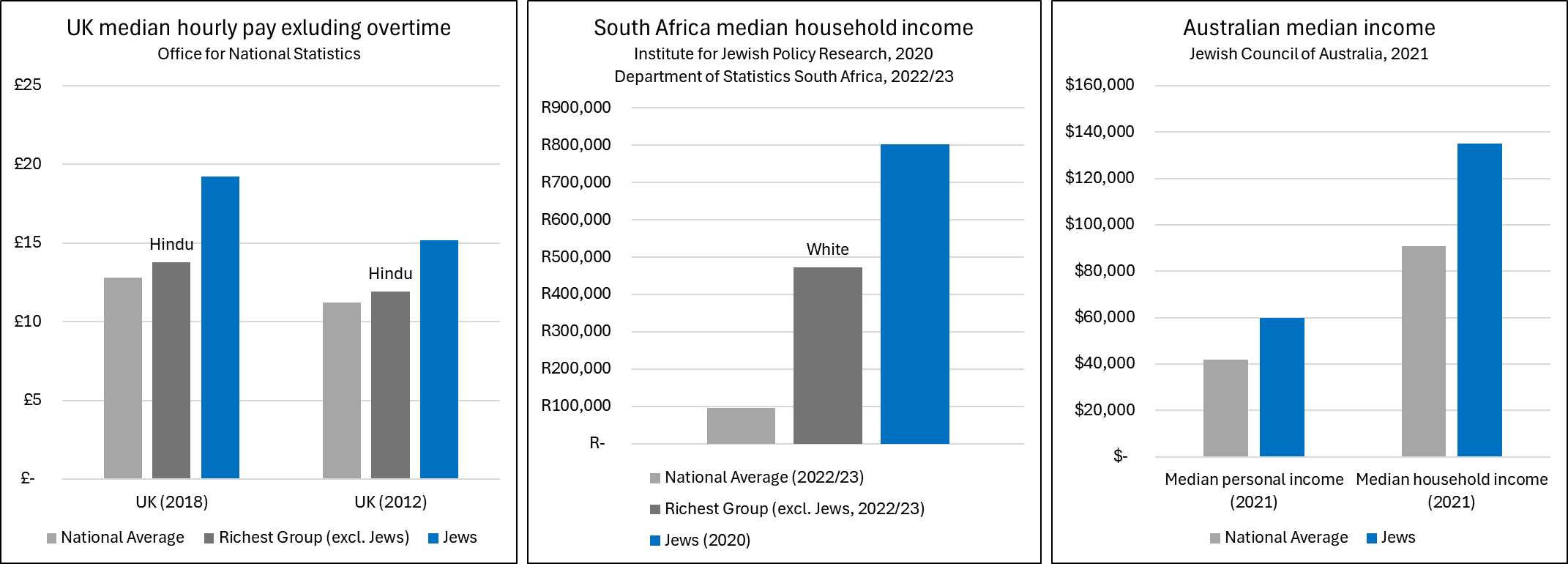
Similar trends appear in the UK and Canada. Based on the latest UK government census data for 2018, British Jews had:
The highest median hourly pay by a significant margin.
The highest representation in high-skill level occupations.
The highest proportion in managerial positions by a significant margin.
The second highest level of educational attainment after Hindus.
In Canada, based on data from the official government’s 2021 Census of Population:
24% of Jews report household incomes of over $100,000, compared to the national average of 10%, the highest of any other group by a factor of 2 times.
53% of Jews have attained a Bachelor’s degree or higher, compared to the national average of 27%, the highest of any other group.
In France, finding this type of data is much harder as French law prohibits the collection of any data based on race, ethnicity or religion. However, in a survey conducted in 2015 by the French Institute of Public Opinion (IFOP), results showed:
French Jews were more likely to report managing easily with their income (31%) than the general French population (17%).
Fewer Jewish respondents reported financial difficulty (28% vs 37% of the general population).
An article by JFeed estimates that around 65%-70% of Jewish children in France attend private education, whether Jewish or non-Jewish schools, compared to only 20% across the general French population.
In Australia, a study of 2021 census data by the Jewish Council of Australia (JCA) showed that Australian Jews have a median household income 49% higher than the rest of the population.
The disparity between Jews and other demographics is particularly stark when looking at Global South nations. A 2020 survey by the Institute for Jewish Policy Research found that the median household income of South African Jews was R803,000. For comparison, South Africa’s Income & Expenditure Survey (2022/23) reports a national median household income of R95,770, meaning Jewish households earned over eight times the national median. The figure is also significantly higher than the median income of white households (R472,788) and almost ten times that of black African households (R81,290).
Negligible hiring discrimination
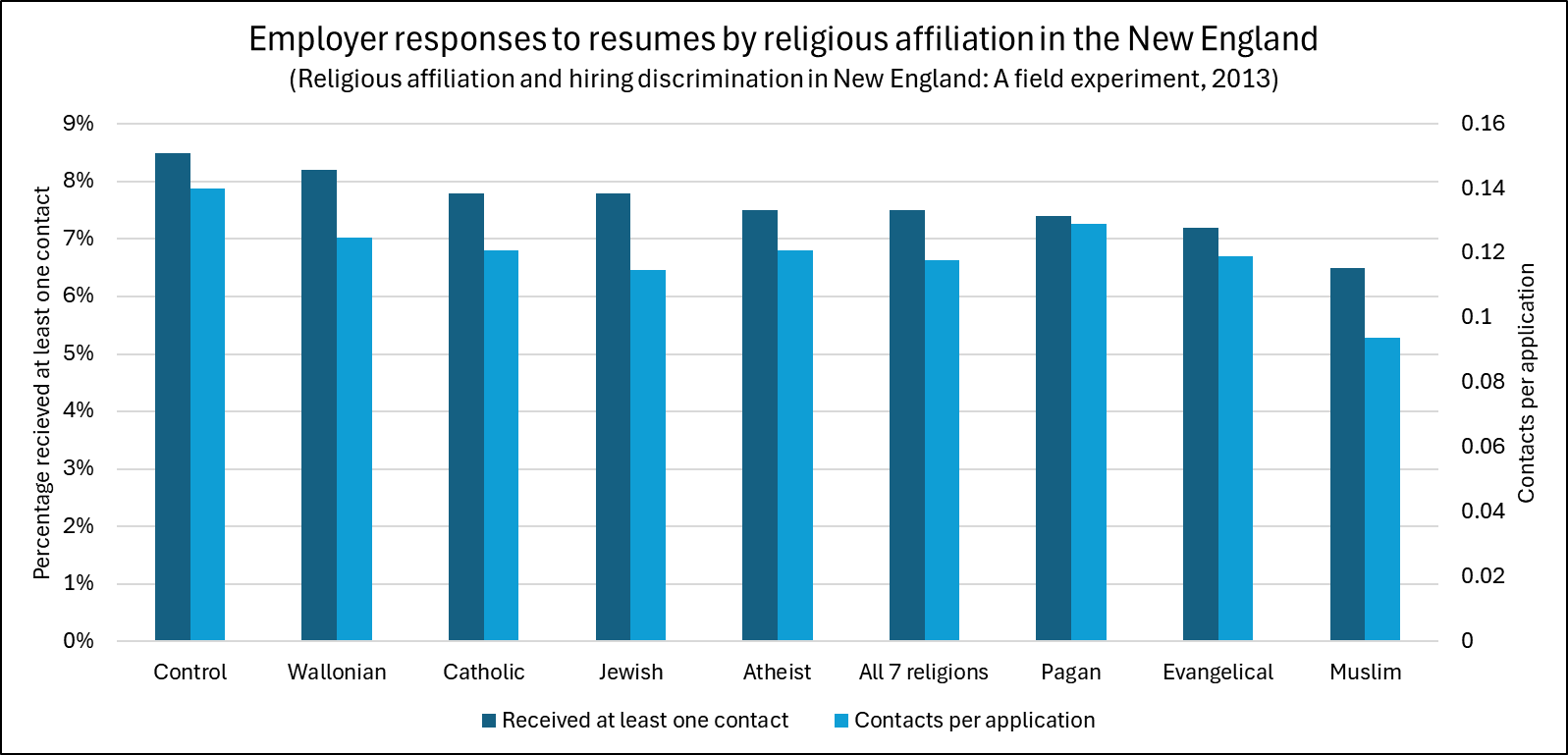
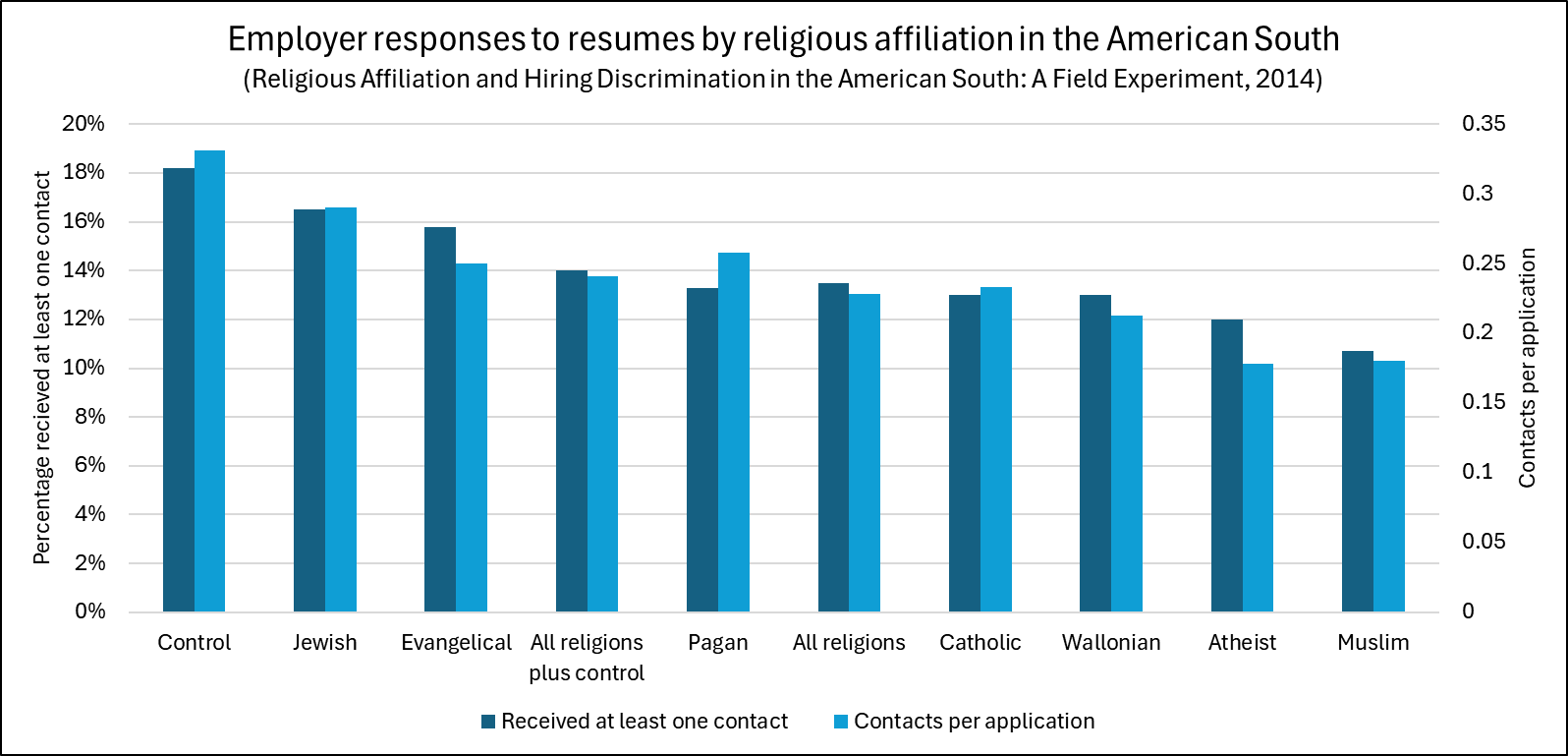
In 2013 and 2014, researchers at the University of Connecticut conducted two large field experiments examining the effect of religious affiliation on hiring discrimination in the United States. The studies, carried out in New England and the American South, involved sending thousands of fictitious resumes to real job advertisements with otherwise identical qualifications but different religious signals, including Jewish, Muslim, Christian, atheist and “Wallonian” (a fictitious religion) affiliations, as well as a control group with no religious affiliation listed. Across both studies, applicants identifying with any religion generally received fewer responses than applicants who listed no religious affiliation, with religious identifiers overall being about 24–26% less likely to receive phone calls from employers.
In both studies, Jewish applicants showed “little-to-no evidence of receiving discrimination,” with researchers describing Jews as having “escaped totally unscathed” by the broader pattern of religious penalties. By contrast, Muslim applicants consistently experienced some of the strongest negative effects. In the New England study, Muslim applicants were 38% less likely to receive a phone call than the non-religious control group (3.4% versus 5.5%), received 41% fewer total phone calls, were 24% less likely to receive any contact from employers, and received 33% fewer total contacts overall. Similar patterns appeared in the Southern study, where Muslims again experienced among the highest levels of hiring discrimination, while Jewish applicants remained the only religious group largely unaffected by the broader reduction in employer responses.
A field experiment in France conducted between 2013 and 2014 examined religious discrimination in hiring by sending fictitious resumes of comparable Catholic, Jewish, and Muslim applicants to employers. The study found that Catholic applicants received an interview invitation after approximately five applications, Jewish applicants after about six, and Muslim applicants after roughly ten, indicating a substantially larger penalty for Muslim candidates. The results also showed that signalling a more secular (non-practicing) identity significantly improved the chances of Muslim applicants receiving callbacks, whereas no comparable effect was observed for Catholic or Jewish applicants.
Over-representation of Jews among the upper strata
On January 2025, Forbes Israel proudly published a list of the World’s Jewish Billionaires. The list includes 276 names; Forbes in 2025 recorded a total of 3,028 billionaires, equating to over 9% of all billionaires being Jews. For reference, there are 902 billionaires from the U.S. on the list, equating to about 30% of all billionaires. Comparing these numbers to their respective populations, that equates to approximately one out of every 385,000 Americans being a billionaire vs one out of every 57,000 Jews worldwide being a billionaire.
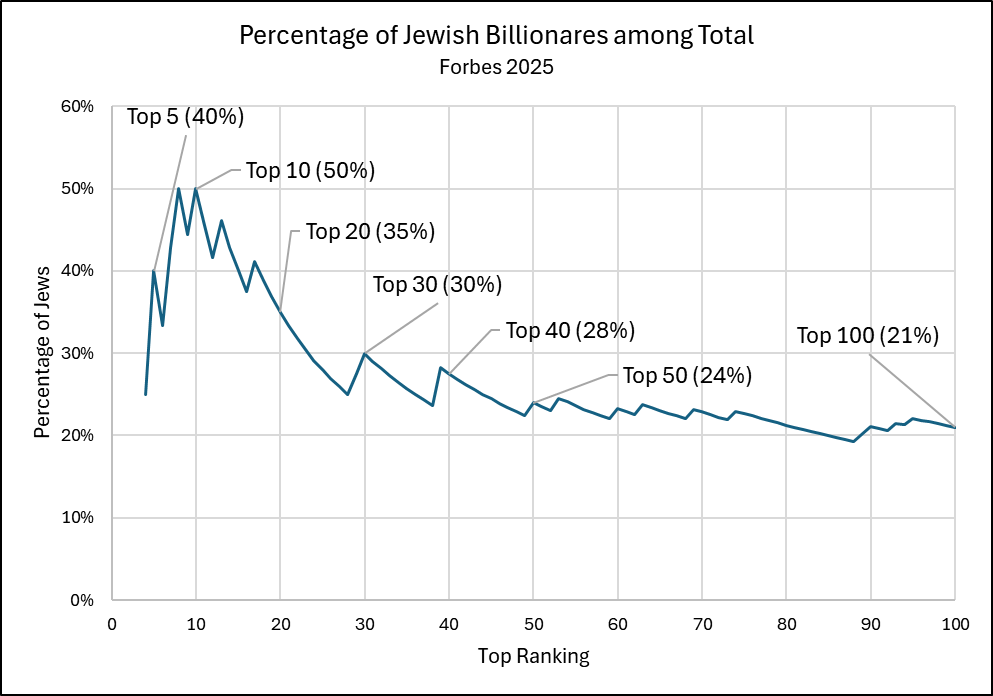
Further analyzing the data shows the extreme over-representation of Jews among billionaires particularly at the very top, with 40% of the top 5 world’s wealthiest people being Jewish; half of the top 10; almost a quarter of the top 50 and over a fifth of the top 100.
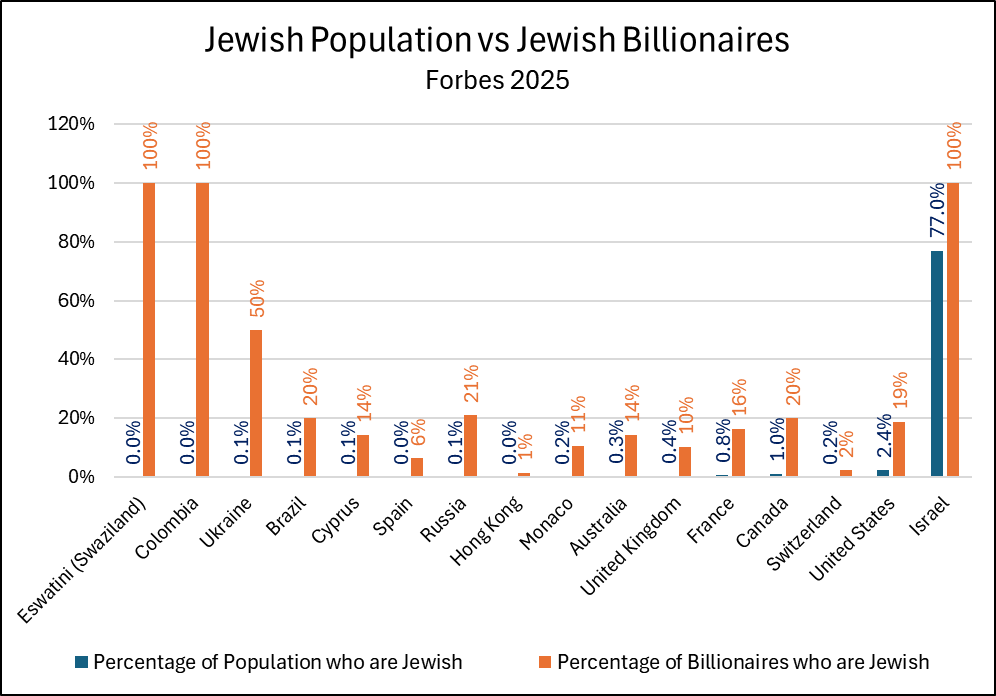
Breaking down the data by country shows the extreme disparity between the proportion of Jews in each country compared to the proportion of Jews among the billionaires of each country. Countries like Eswatini in Africa and Colombia in South America which only have one billionaire each, that billionaire happens to be a Jewish person. In countries like Ukraine, Russia, Brazil, Cyprus and Australia who have a Jewish population of less than 0.5%, between 15-50% of their billionaires are Jewish. On multiple occasions, the South African Jewish Report has openly bragged about how Jews consistently make up between 20-26% of the wealthiest individuals in South Africa despite being around 0.1% of the population.
Jewish attorneys in the U.S. represent about 15% of the lawyer population. Jewish senators in the U.S. Senate make up 9% of senators as of 2025, a higher relative representation to the country’s population than Christians or other religions and unaffiliated. Between 1901 and 2024, Jews and people of half- or three-quarters-Jewish ancestry account for 22% of Nobel Prize laureates (36% of American recipients) despite making up only 0.2% of the world’s population, with the lowest being 8% in the Peace category and highest being 40% in Economics. Other awards with a high representation of Jewish award holders include:
Japan’s Kyoto Prize: 24% of recipients are Jewish
US National Medal of Science: 38% of recipients are Jewish
Grande Médaille of the French Academy of Sciences: 48% of recipients are Jewish
Foreign Membership in the British Royal Society: 25% of total members are Jewish
In a paper published in 2007 by Richard Lynn of the University of Ulster and Satoshi Kanazawa of the London School of Economics titled How to explain high Jewish achievement: The role of intelligence and values, the following was summarized regarding Jewish over-representation among elites even going back to the early 20th century:
“Jews have been greatly over-represented among intellectual elites, in the professions, the universities, among business leaders and the very rich in 20th century. Weyl and Possony (1963, p. 142) calculated that in the period 1901–1962 16% of Nobel prize-winners for science were Jewish. They estimated the world population of Jews in 1938 at 18 million and the world population of European gentiles at 718 million, and calculated that Jews were over-represented by a factor of approximately 6.6. Jews have been about half of the world’s top rated chess grandmasters between 1851 and 2000 (Rubinstein, 2004) and of the champion American bridge players and theoreticians (Storfer, 1990).
In the 20th century, Jews have been greatly over-represented in a number of countries among intellectual elites and in the higher socio-economic status occupations. In Austria in the years between the two World Wars Jews were approximately 3.5% of the population but were 27.3% of university professors (Fraenkel, 1967). In Germany between 1918 and 1933 Jews were 0.78% of the population but were 16% of the doctors, 15% of the dentists, 25% of the lawyers, 50% of the theatre directors and occupied 80% of the leading positions in the Berlin stock exchange (Gordon, 1984, Slezkine, 2004). In Poland in 1931 Jews were 10.2% of the population but were 56% of the doctors in private practice, 33% of the lawyers, and 24% of the pharmacists (Slezkine, 2004). In Russia during the period 1917–1939 Jews were approximately 1.8% of the population, while Jews were 9% of the officers in military academies, 15% of the university graduates, 11% of the doctors and 14% of the university professors (Slezkine, 2004).
In Britain, the numbers of Jews and gentiles possessing large wealth in the period from 1809–1939 have been examined from probate returns on death by Rubinstein (2000). He has found 199 such individuals of whom 28 were Jews (14.1%). The average number of Jews in the population during this period was approximately 0.4%, so Jews were 28.4 times over-represented among the very wealthy. Prais and Schmool (1975) calculated that 10% of Jews and 4% of gentiles were in the higher professions in 1961, and hence Jews were over-represented by a factor of 2.5. In a later study, Tropp (1991) examined the numbers and proportions of Jews in eleven of the major professions around 1985. He found that the percentage of Jews ranged from 1.3% among chartered surveyors to 7.8 among opthalmic opticians. At this time there were approximately 322,000 Jews in the United Kingdom in the total population of 56,379,000 (the figure in the 1981 census). Thus, in 1985 Jews were approximately 0.6% of the population. Even among chartered surveyors Jews were over-represented by a factor of 2.2, while among opthalmic opticians Jews were over-represented by a factor of 13.0.
Finally, the largest population of Jews outside Israel in the 20th century has been in the United States and here also Jews have done well. As early as 1908 Jews began to outperform gentiles in the entrance tests for universities that were first constructed by the College Entrance Examination Board in 1899. Increasing numbers were gaining admission to the Ivy League colleges. In 1908 the percentages of Jews in all colleges and at Harvard were 7% and 6%, respectively, and by 1919 this had increased to 20% of the students at Harvard and about the same figure at Yale, Brown and Pennsylvania, while at Columbia 40% of the students were Jewish (Slezkine, 2004).
From 1957 through 1990 the average annual earnings of Jewish men were about 130% of those of white gentiles (in 1990 $36,700 for Jews and $28,080 for white gentiles) (Chiswick, 1985, Kosmin and Lachman, 1993). By the 1990s Jews were hugely over-represented among the very wealthy, when they comprised more than a quarter of the people on the Forbes Magazine list of the richest four hundred Americans, 45% of the top 40 richest Americans, and one-third of all American multimillionaires (Silbiger, 2000).
It has been found that Jews are considerably over-represented among the eminent in the United States. Weyl (1966) calculated that Jews were over-represented by a factor of 4.48 in seven reference books of the eminent (e.g. Who’s Who in America, American Men and Women of Science, Who’s Who in Finance and Industry, etc.). In an updated analysis of Who’s Who in America for the years 1994–5, McDermott (2002) has calculated that Jews were over-represented by a factor of 16.62.”
— Richard Lynn and Satoshi Kanazawa, How to explain high Jewish achievement: The role of intelligence and values (2008)
Israel: A Settler-Colonial Project by Jews, for Jews
Additionally, Jews have their own ethnostate, Israel, a settler-colonial project explicitly run by Jews, for Jews, at the expense of non-Jews, backed militarily, financially, and diplomatically by the world’s most powerful governments.
The constitution of Israel explicitly states that Israel is the “Nation-State of the Jewish People,” stating that the “right to exercise national self-determination in the State of Israel is unique to the Jewish people;” and the “state views the development of Jewish settlement as a national value and will act to encourage and promote its establishment and consolidation.”
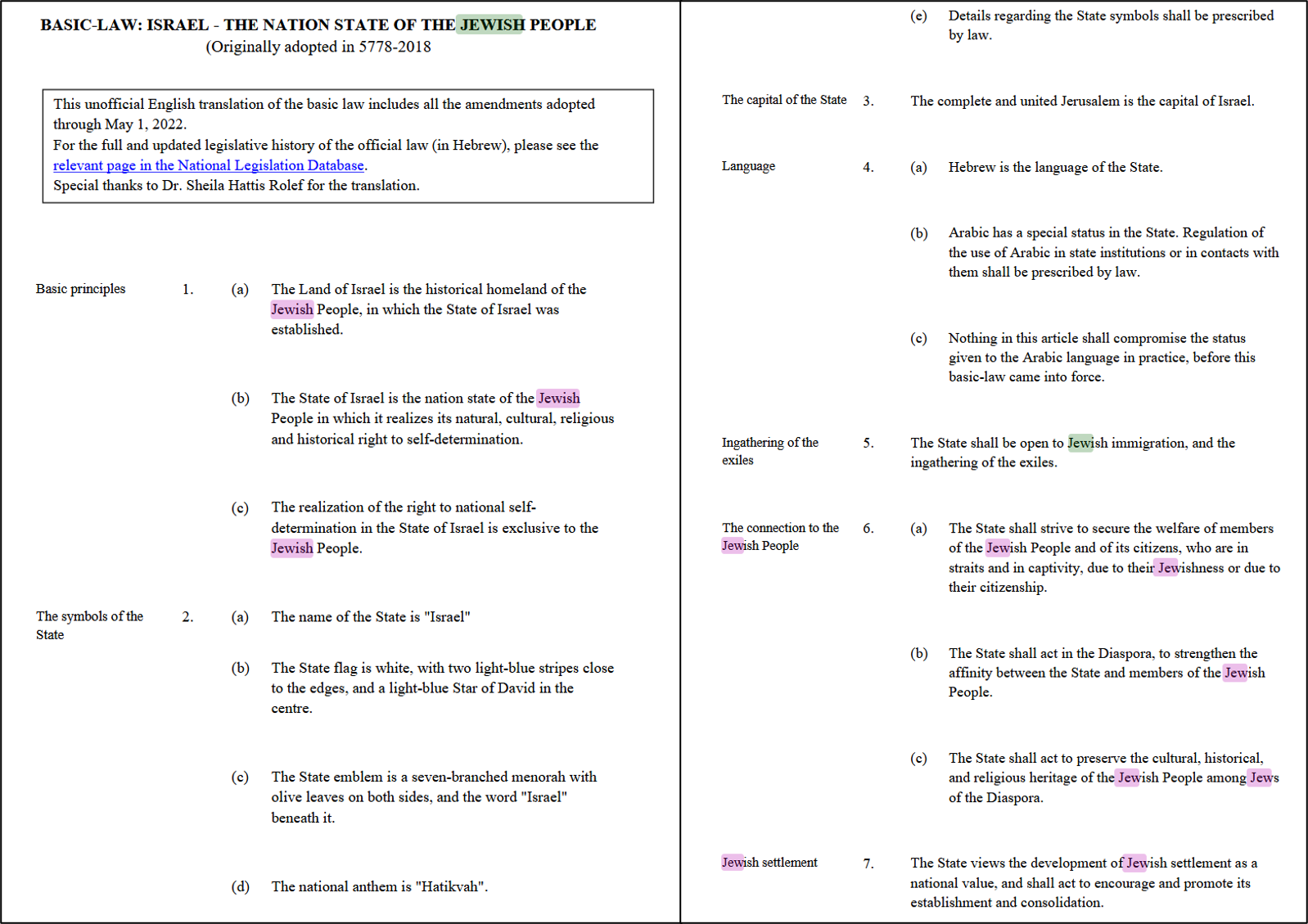
Under the Israeli Law of Return, anyone worldwide with one or more Jewish grandparent has the right to colonize Palestine, displacing indigenous Palestinians from their land and homes, while Palestinians can’t return to the lands they were ethnically cleansed from, even if they literally still have the physical keys to their houses.



In a twisted turn of events, White South Africans who freshly convert from Christianity to Judaism are more than welcome by the government to come and colonize Palestinian land and steal houses and even livestock. A growing number of Afrikaners convert to Orthodox Judaism to go live in West Bank settlements; apartheid resumed without a pause. Meanwhile, Palestinian requests to convert to Judaism are automatically rejected.

This selective embrace of “new Jews” extends to an even more absurd scenario: India’s Bnei Menashe, a community of about 11,000 previously Christian Indians whose tribal leader declared he was Jewish after having dreamt so. Despite no DNA evidence, a Christian past, and opposition from Israeli politicians, Israel’s Chief Rabbi recognized them as a “lost tribe” in 2005. In late 2025, the government approved a five‑year plan to bring the remainder to Israel, with Prime Minister Benjamin Netanyahu calling it an “important and Zionist” decision to strengthen the Galilee region. By April 2026, the first batch of around 250 arrived under “Operation Wings of Dawn,” with thousands more expected. Footage from a 2021 batch shows them being welcomed by Israel’s Immigration Absorption minister—an Ethiopian Jew.

It probably doesn’t require going into much detail, but in addition to the ability of almost any Jew from around the world to colonize Palestine, Jews in Israel enjoy a very high standard of living:
Israel’s standard of living is significantly higher than all of the other countries in the region and equal to Western European countries, and is comparable to that of other highly developed countries. Israel was ranked 19th out of 189 countries on the 2019 UN Human Development Index, indicating “very high” development. It is considered a high-income country by the World Bank. Israel also has a very high life expectancy at birth. It is ranked 4th in UN’s Global happiness index and second in index of young people.
— Wikipedia, Standard of living in Israel (2025)
Jews who move to Israel immediately receive various government financial benefits. The main program is the Sal Klita (“absorption basket”), which provides direct cash grants for the first year, ranging from about USD $6,650 for a single person to $15,600 for a couple, which additional payments provided for each child ranging from about $2,610 to $3,930 depending on the child’s age based on 2025 figures. In addition, they receive:
Tax benefits: 10-Year exemption on foreign income, capital gains, and purchase tax for first apartment. Starting in 2026, the first 2 years in Israel will be income tax-free.
Housing support: Rent assistance for up to 5 years and access to subsidized, state-backed mortgages.
Healthcare: Immediate, subsidized health coverage, with premiums covered by the state for the first 12 months.
Social services: Free Hebrew language courses and social insurance (child allowance, old age allowance, disabilities).

Conclusion
For the most part, in this day and age, Jews are one of the most privileged demographics on Earth and have been for decades; it is advantageous to be a Jew. Finkelstein summarized this based on data even going as far back as 1970, drawing on a comprehensive analysis by Seymour Martin Lipset and Earl Raab:
“As anti-Semitic barriers quickly fell away after World War II, Jews rose to preeminence in the United States. According to Lipset and Raab, per capita Jewish income is almost double that of non-Jews; sixteen of the forty wealthiest Americans are Jews; 40 percent of American Nobel Prize winners in science and economics are Jewish, as are 20 percent of professors at major universities; and 40 percent of partners in the leading law firms in New York and Washington. The list goes on. Far from constituting an obstacle to success, Jewish identity has become the crown of that success. Just as many Jews kept Israel at arm’s length when it constituted a liability and became born-again Zionists when it constituted an asset, so they kept their ethnic identity at arm’s length when it constituted a liability and became born-again Jews when it constituted an asset.”
— Norman Finkelstein, The Holocaust Industry: Reflections on the Exploitation of Jewish Suffering (2000)
Not only are Jews disproportionately represented in the richest and most powerful individuals in the world, but by global standards, Jews as an entire demographic are at the top bracket economically, socially, and embedded within upper white colonial society, giving antisemitism discourse access to resources actual marginalized groups lack. It is backed by multi-million-dollar advocacy organizations, lobbying networks, legal infrastructures, think tanks, media platforms, and direct state support. These mechanisms are not sustained solely by wealthy Jews, but through a broader elite coalition, including Western governments and institutions with a vested interest in promoting Zionism.
The figures in this post, checked
Each figure was checked against the source Tariq cited. Open a topic to see the source's own wording for every figure.