Zionism: A Project of the Rich, not Refugees
The common myth of Israel as a safe haven for poor Jewish refugees ignores its origins as a calculated land grab and top-down colonial project led and financed by wealthy European imperialists.

NOTE: This is an excerpt from a longer article:
A common myth perpetuated by Zionists is that Israel was created as a safe haven for Jews fleeing antisemitism and pogroms, or even as a direct consequence of the Holocaust. In reality, the settlement and colonization of Palestine was from inception a land grab by wealthy Jewish elites first and foremost. Zionism was conceived decades before the foundation of Israel explicitly as a settler-colonial project rooted in late-19th-century European imperialism and nationalism. Its leading advocates were overwhelmingly secular, educated, wealthy Jews with connections to major politicians, alongside influential Christian Zionists, embedded within European political and social elites, not impoverished or socially marginalized masses. The key leaders of the Zionist movement and before rejected the idea of Israel being a home for Jewish refugees.
Imperial roots of Zionism
The ideological seeds for this elite-driven project were planted even earlier, rooted in European imperial ambition. As far back as 1799, during the French invasion of the Arab world, Napoleon Bonaparte issued a proclamation offering Palestine as a homeland to Jews under French protection, aiming to “re-establish ancient Jerusalem.” The idea is theorized to have originated from a letter written to Napoleon by Thomas Corbet from the ultra-wealthy aristocratic Corbet family in England in which he wrote "I recommend you, Napoleon, to call on the Jewish people to join your conquest in the East, to your mission to conquer the land of Israel" saying, "Their riches do not console them for their hardships. They await with impatience the epoch of their re-establishment as a nation." Rabbi Aharon Ben-Levi of Jerusalem even called on Jews to enlist in Napoleon’s army to “return to Zion as in the days of Ezra and Nehemiah.”
Forty years later, the plan was revived by the British, but this time the restoration of the Jews to Palestine was conceived purely as a geopolitical instrument within the context of the "Eastern Question," the diplomatic struggle to manage the decline of the Ottoman Empire. In 1840, as British Foreign Secretary Lord Palmerston wrote to his ambassador in Constantinople urging the Sultan to open Palestine for Jewish immigration, arguing that wealthy European Jews would bring capital that would bolster the Sultan’s collapsing regime against the revolt of Egyptian governor Mohammad Ali, while simultaneously creating a British-aligned buffer population to check the rival ambitions of Imperial Russia and prevent a French-dominated successor state from arising on the ruins of the Ottoman Empire.
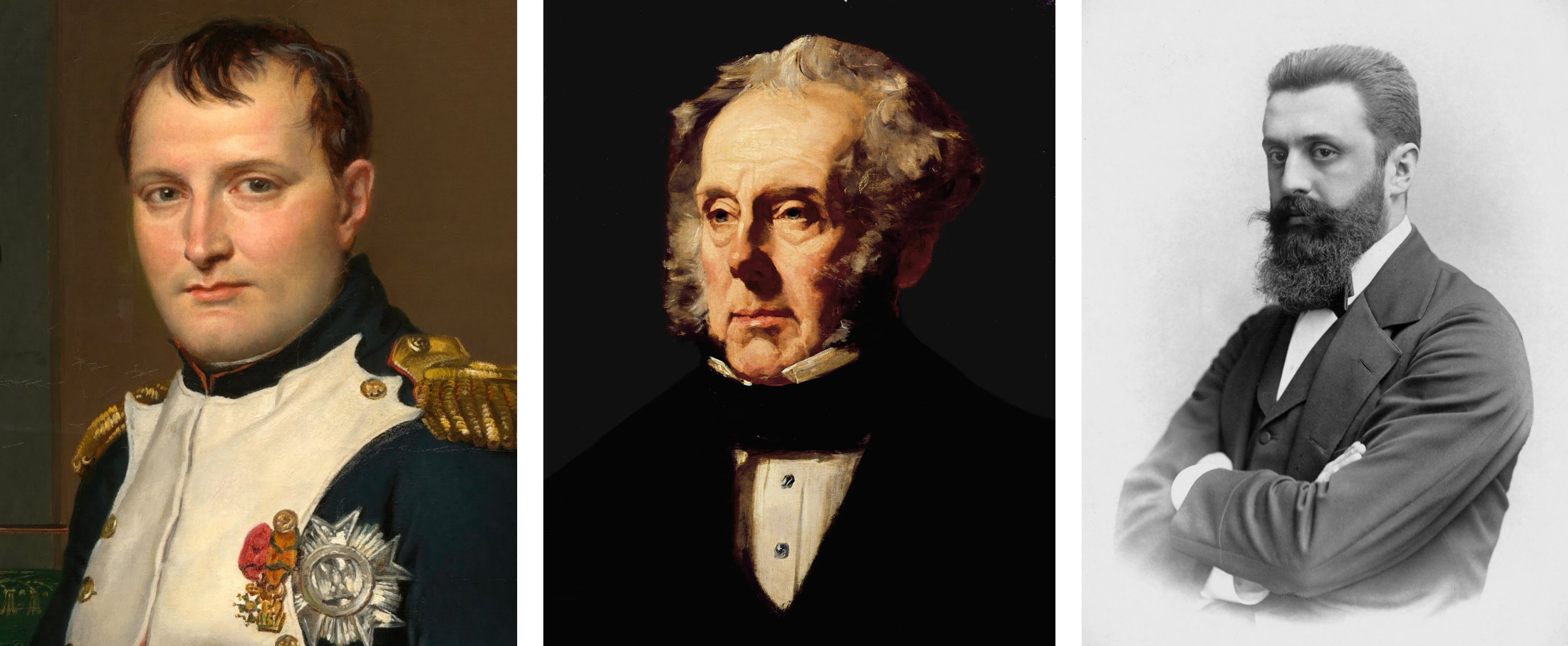
“There exists at present among the Jews dispersed over Europe a strong notion that the Time is approaching when their nation is to return to Palestine; and consequently their wish to go thither has become more keen, and their thoughts have been bent more intensely than before upon the means of realizing their wish. It is well known that the Jews of Europe possess great wealth; and it is manifest that any country in which a considerable number of them might choose to settle, would derive great benefit from, the riches which they would bring to it. Whether Mehemet Ali accepts the first or the second offer which is to be made to him, in either case, it would be of manifest importance to the Sultan to encourage the Jews to return to, and to settle in Palestine, because the wealth which they would bring with them would increase the Resources of the Sultan’s Dominions; and the Jewish people, if returning under the sanction and protection, and at the invitation of the Sultan, would be a check upon any future evil designs of Mehemet Ali or his Successor. I have to instruct Your Excellency to bring these Considerations confidentially under the notice of the Turkish Government, and strongly to recommend to hold out every just encouragement to the Jews of Europe to return to Palestine.”
— Lord Palmerston, Viscount Palmerston to Viscount Ponsonby (1840)
A century after Napoleon’s proclamation, his vision of statehood through imperial sponsorship directly inspired Theodor Herzl, who wrote in a letter in March 1899 to Kaiser Wilhelm II: “what couldn’t be fulfilled under the rule of Napoleon I can be fulfilled by Wilhelm II.” This continuity underscores that the Zionist vision was, from its earliest conceptions, an elite venture seeking patronage from great powers.
The financiers, elite patrons and early land grabs
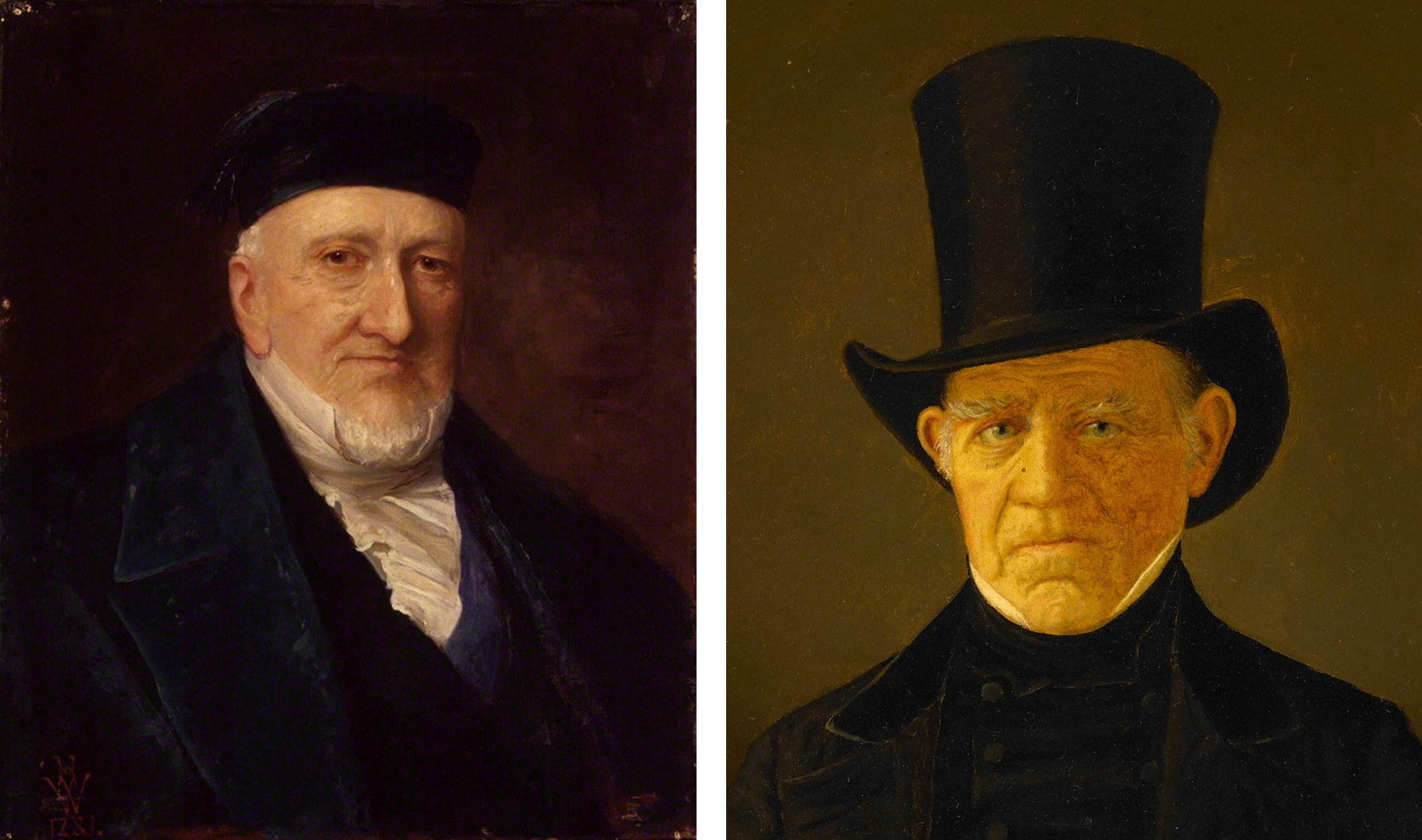
Key early “proto-Zionist” figures exemplify this financial and political influence. They include Judah Touro, a successful American businessman who owned ships and slaves; and Moses Montefiore, a wealthy British financier and Sheriff of London. Montefiore’s wife was the sister of Nathan Mayer Rothschild’s wife for whom Montefiore’s firm acted as stockbrokers. His journeys to Palestine began in the 1830s and as early as 1840, he advocated for Jews in the Ottoman Empire which controlled Palestine, and held meetings with future Prime Minister of the UK, Lord Palmerston. As president of the Board of Deputies of British Jews, he corresponded with Colonel Charles Henry Churchill, the British consul in Damascus, in 1841–42. Montefiore baldly stated in an interview:
I do not expect that all Israelites will quit their abodes in those territories in which they feel happy, even as there are Englishmen in Hungary, Germany, America, and Japan; but Palestine must belong to the Jews, and Jerusalem is destined to become the seat of a Jewish Empire.
— Sir Moses Haim Montegiore (1863)
Upon his death in 1854, Touro left $50,000 (equivalent to $9 million today) in his will to fund Jewish settlements and various projects in Palestine, appointing Montefiore as executor of his will. One of these earliest Jewish settlements established was Mishkenot Sha’ananim built in 1859–1860.
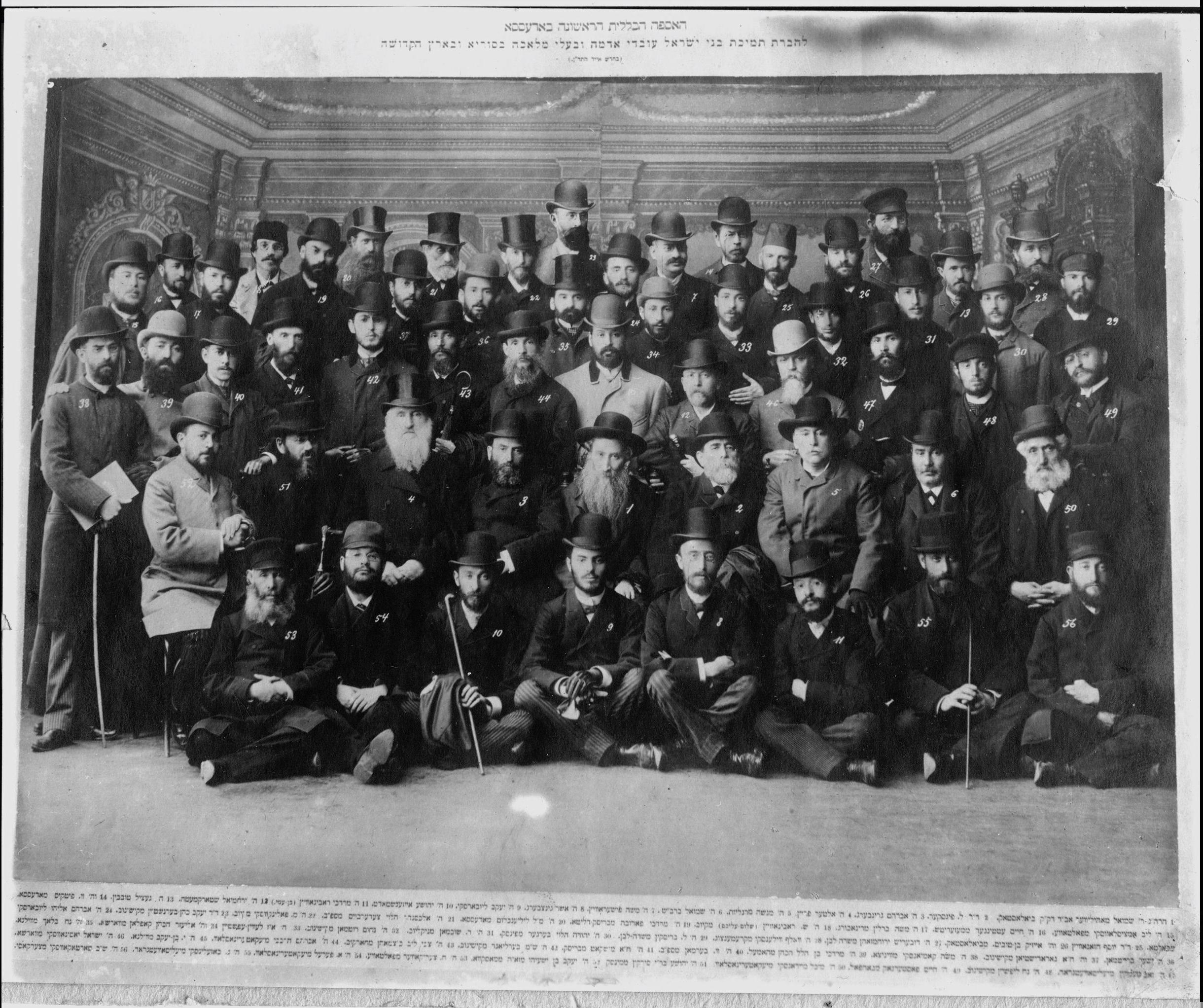
The founding of early settlements in Palestine underscores this reliance on capital. Figures like Isaac Leib Goldberg, Reuven Yudalevich, and Zalman David Levontin—all wealthy individuals from the Russian Empire associated with the Hovevei Zion (Lovers of Zion) movement—established Rishon LeZion in 1882. This pattern was set earlier with settlements like Petah Tikva and Rosh Pinna, both founded in 1878 by affluent European Jews who purchased land. These “First Aliyah” communities were not established by refugees but by land purchasers with the means to acquire and develop territory, embodying the colonial “land grab” at its inception.
The case of David Ben-Gurion (born David Grün), the founder and first Prime Minister of Israel, further illustrates that early Zionist migration was often ideological and opportunistic, not a flight from immediate, existential persecution. Ben-Gurion migrated to Palestine in 1906, over four decades before Israel’s founding. His personal experience underscores that for many early leaders and settlers, Zionism was a proactive nationalist venture, not a reactive refuge. In his memoirs, he described his hometown of Płońsk, Poland, as relatively free of violent antisemitism, writing:
For many of us, anti-Semitic feeling had little to do with our dedication [to Zionism]. I personally never suffered anti-Semitic persecution. Płońsk was remarkably free of it ... Nevertheless, and I think this very significant, it was Płońsk that sent the highest proportion of Jews to Eretz Israel from any town in Poland of comparable size. We emigrated not for negative reasons of escape but for the positive purpose of rebuilding a homeland ... Life in Płońsk was peaceful enough. There were three main communities: Russians, Jews and Poles. ... The number of Jews and Poles in the city were roughly equal, about five thousand each. The Jews, however, formed a compact, centralized group occupying the innermost districts whilst the Poles were more scattered, living in outlying areas and shading off into the peasantry. Consequently, when a gang of Jewish boys met a Polish gang the latter would almost inevitably represent a single suburb and thus be poorer in fighting potential than the Jews who even if their numbers were initially fewer could quickly call on reinforcements from the entire quarter. Far from being afraid of them, they were rather afraid of us. In general, however, relations were amicable, though distant.
— David Ben-Gurion, Memoirs: David Ben-Gurion (1970)
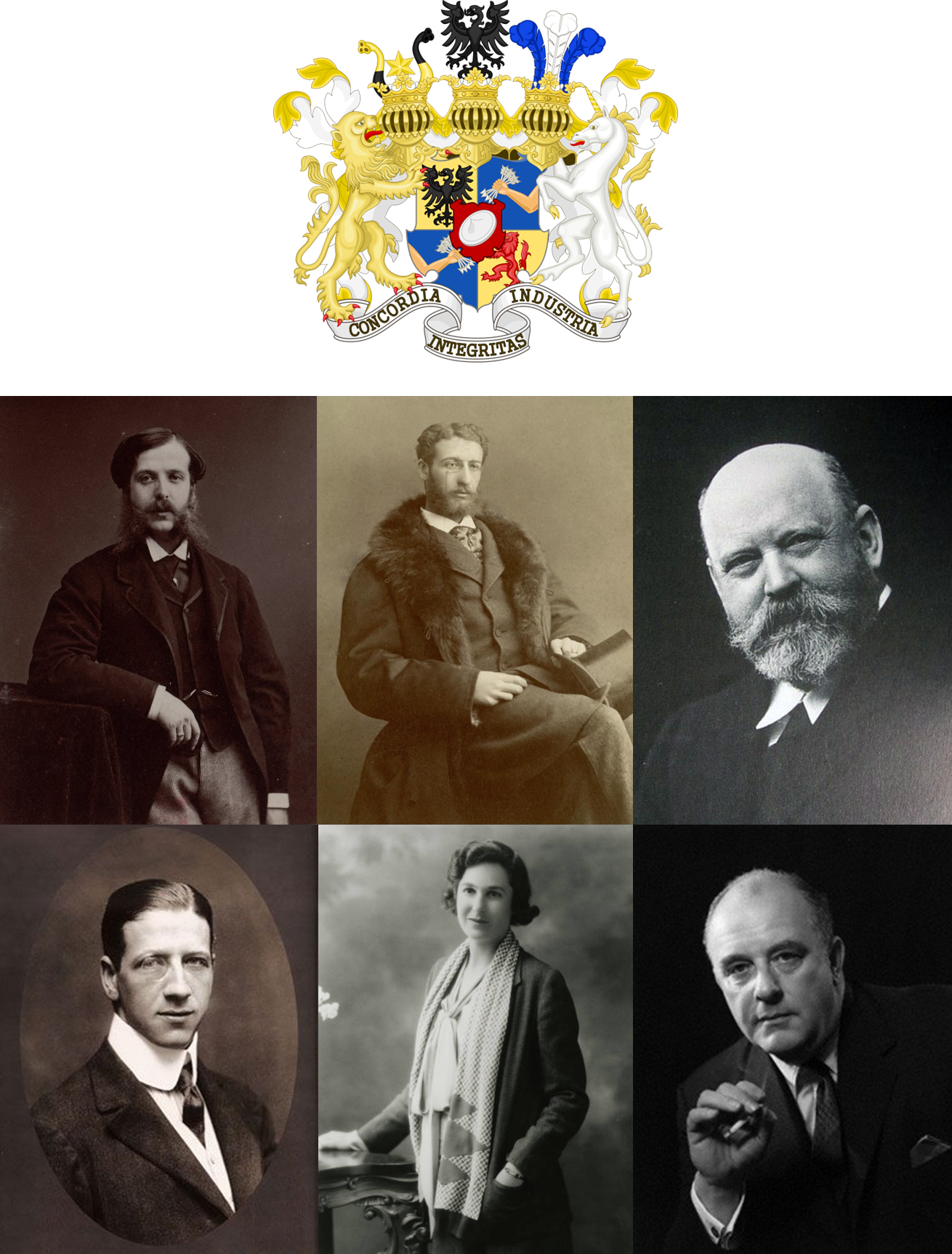
The Rothschild family, who possess the largest private fortune in the world as well as in modern world history, have been active key supporters of Zionism ever since the French Alphonse Rothschild took over the management of the family bank in 1868. The Rothschild family archives show that during the 1870s, the family contributed nearly 500,000 francs per year to the Alliance Israélite Universelle, a Paris-based international Zionist organization founded in 1860.
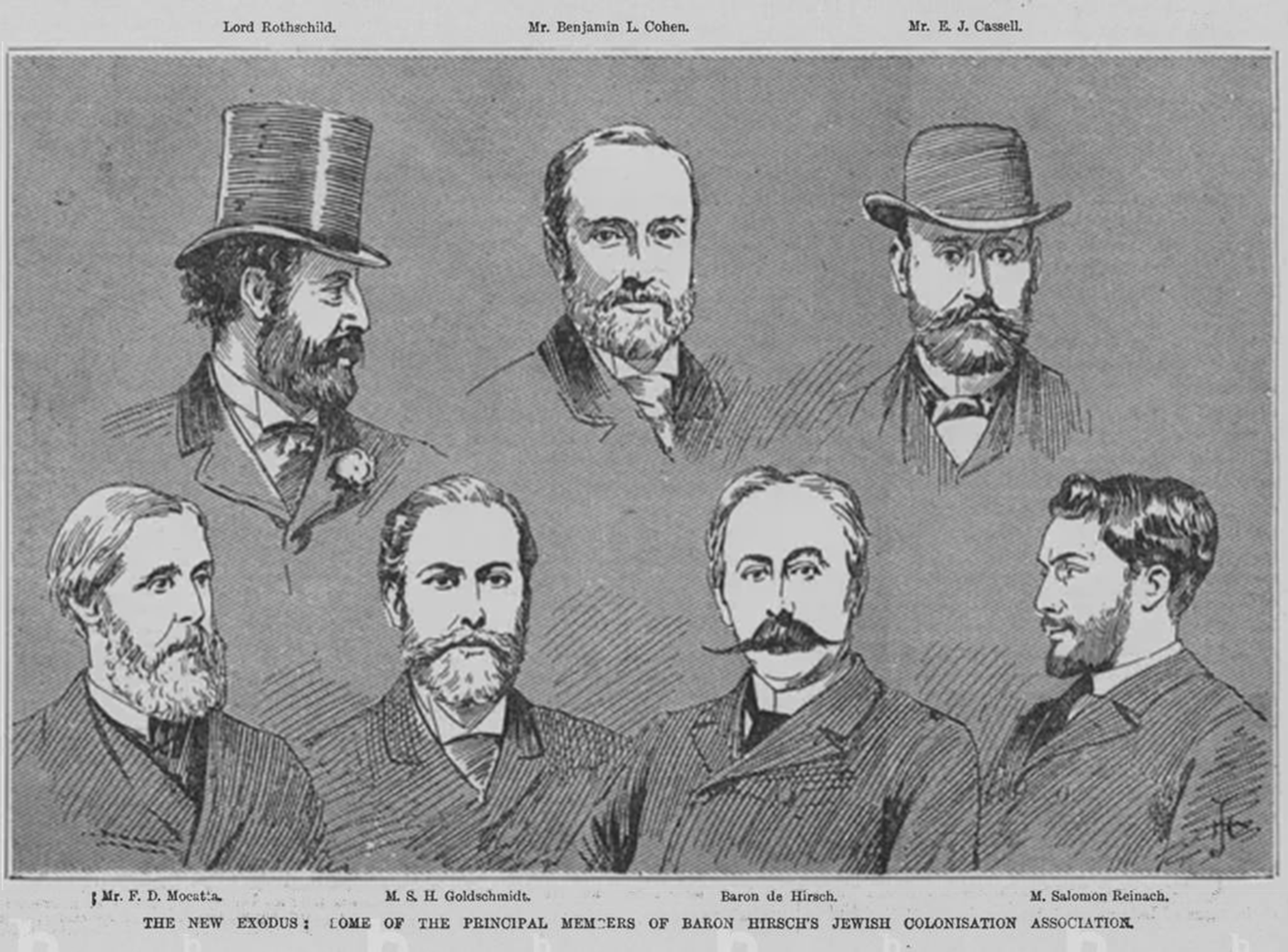
Baron Edmond Rothschild, Alphonse’s younger brother, was known in Israel as “the Benefactor.” He financed some of the first Jewish agricultural colonies in the late-19th and early-20th centuries including the Rishon LeZion and Petah Tikva settlements. The Jewish Colonisation Association (JCA) was founded in 1891 by Baron Maurice de Hirsch, a wealthy German financier from a family of court bankers. Baron Rothschild took an active role in the organization after Hirsch’s death in 1896, transferring his Palestinian land holdings as well as 15 million francs to it, with his son James appointed as president for life. By the time Edmond died in 1934, he had claimed nearly 500,000 dunams (500 square kilometers or about 124,000 acres) of land and almost 30 settlements.
Other members of the family, including the British Lord Walter Rothschild, played a significant political role as leading member of the British Zionist Federation and served as an intermediary between the British government and Zionist leaders such as the Russian Chaim Weizmann (who would later become the first President of Israel). He was the addressee of the 1917 Balfour Declaration to the Zionist Federation, a letter which committed the British government to the establishment of a home for Jewish people in Palestine. His nephew Victor was against granting asylum or helping Jewish refugees in 1938. The Rothschild family played significant parts in the funding of Israel’s governmental infrastructure including financing the Knesset and Supreme Court buildings.
This elite character is further evident in foundational documents. Theodor Herzl, who is considered the father of modern political Zionism, authored the 1896 pamphlet, Der Judenstaat (The Jewish State). Originally titled “Address to the Rothschilds,” it framed the movement as a political solution for European powers to the “Jewish question.” He explicitly directed his appeal to figures like the Rothschild family and other wealthy patrons to fund a colonization project, with territories like Argentina also considered. Herzl argued, “I consider the Jewish question neither a social nor a religious one... It is a national question, and to solve it we must first of all establish it as an international political problem to be discussed and settled by the civilized nations of the world in council.”
This logic of seeking imperial sponsorship was not merely theoretical; Herzl described the project in a 1902 letter to British financier, colonial statesman and mining magnate Cecil Rhodes as “something colonial” and wrote that “the Governments of all countries scourged by Anti-Semitism will be keenly interested in assisting us.” This strategy shaped subsequent diplomacy, culminating in the Balfour Declaration of 1917, which reflected elite lobbying and imperial interests rather than mass Jewish demand, having been authored by elite Jews and Christian Zionists.
The movement’s leadership and funding structures were decisively top-down. Early figures like Herzl, Chaim Weizmann, Max Nordau, Leo Motzkin and others were lawyers, journalists, doctors, academics, and businessmen embedded in European political and cultural life. Settlement was financed by wealthy patrons like Baron Edmond de Rothschild and institutions bearing explicit colonial names, such as the Jewish Colonisation Association (1891), the Jewish Colonial Trust (1902), and the Palestine Jewish Colonisation Association (1924). The project required capital far beyond the means of working-class Jews, who were often excluded.
The deliberate exclusion of refugees and the “weak”
The project was executed through a “capitalists first” immigration policy. Leaders like Arthur Ruppin and Menahem Sheinkin who were in charge of Zionist immigration policy systematically turned away about 61% of Jews who wanted to move to the colonies. Sheinkin bluntly stated the rationale: “Until capitalists come to the country, there will be no room for workers.” Early Zionists refused the entry to poor, elderly and sick Jews into Palestine. Jews who survived pogroms, riots and famine faced Zionist cruelty with leaders striving to keep ‘weak people’ from immigrating. In 1919, Weizmann stated “Alas, Zionism can’t provide a solution for catastrophes.”
Gur Alroey, a historian at the University of Haifa, stated that “Weizmann preferred productive immigrants over needy refugees and thought the Land of Israel needed strong, healthy immigrants, not refugees weak in body and spirit.” According to Alroey, Yehoshua Gordon, deputy director of the immigration department in the pre-state Zionist administration “succinctly summed up the Zionist movement’s preferred immigration policy: Reject or deport sick migrants, people unfit for work who might become a burden, and make sure to choose strong, healthy migrants who can cope with the conditions here.”
This elite, state-building objective consistently took priority over humanitarian rescue, even during the Nazi era. In 1938, Ben-Gurion stated that if he could save all Jewish children from Germany by sending them to England, or only half by sending them to Palestine, he would choose the latter, arguing one must weigh “not only the life of these children, but also the history of the people of Israel.” This logic culminated in the controversial 1933 Ha’avara (Transfer) Agreement between Zionist agencies and Nazi Germany, which provided the settlement project with crucial capital while Zionist immigration offices simultaneously rejected two-thirds of German Jewish applicants, favoring those with wealth and skills.

Migration patterns further complicate the narrative of Zionism as a mass movement of the downtrodden. Between 1880 and 1924, while roughly two million Jews left Eastern Europe, the vast majority went to the United States, the United Kingdom, and Latin America, not Palestine. Ben-Gurion later expressed frustration that Western Jews preferred to support Israel from abroad rather than emigrate, highlighting the gap between ideological commitment and the practical choices of most Jewish migrants.
The historical record shows that Zionism was not a spontaneous altruistic humanitarian movement to save oppressed masses. It was a calculated, top-down political and settler-colonial project, conceived by European Jewish elites who viewed colonization under imperial protection as the solution to a national question. Their policies selectively favored wealthy immigrants, sought alliances with imperial powers, and consistently subordinated the immediate rescue of persecuted Jews to the long-term goal of building a state. The later invocation of the Holocaust as a foundational rationale has retroactively obscured these earlier political and colonial origins.
Further reading:
Schölch, A. (1992). Britain in Palestine, 1838–1882: The roots of the Balfour policy. Journal of Palestine Studies, 22(1), 39–56. https://doi.org/10.2307/2537686
Brenner, L. (2002). 51 Documents: Zionist Collaboration with the Nazis. Barricade Books.
Alroey, G. (2014). An Unpromising Land: Jewish Migration to Palestine in the Early Twentieth Century. Stanford University Press. https://doi.org/10.2307/j.ctvqsdkjh
Nir, Y. (2021). Immigration to Palestine during the British Mandate (1922-1948). Cambridge Scholars Publishing.
Greenstein, T. (2022). Zionism During the Holocaust: The weaponisation of memory in the service of state and nation. New Generation Publishing.
Foster, Z. (2024, October 15). Was Zionism about Rescuing Jews Fleeing Persecution? No. Palestine Nexus. https://palestinenexus.com/articles/was-zionism-about-rescuing-jews-fleeing-persecution-no
Foster, Z. (2025, November 6). The eugenist history of the Zionist movement. Palestine Nexus. https://palestinenexus.com/articles/eugenicism
The figures in this post, checked
Each figure was checked against the source Tariq cited. Open a topic to see the source's own wording for every figure.